I’m told that Germans in general are “cheap” and that this is an expected consequence of their economic policies designed to reinforce their industrial base.
I wish I could find the reference I’m thinking of, but the idea was that Germans buying absurdly cheap wine and their constantly underfunded trains were part of a pattern of deliberate domestic under-investment to keep exports competitive.
Dutch may be cheap at hospitality but they're savvy at running business, while Germans are cheap at running business and the economy in general, hence why austerity is their favorite word in the vocabulary, they're penny wise and pound foolish.
And unfortunately the focus on austerity post-2008 spearheaded by Germany only held the EU economy back compared to the US.
If I read Mario Puzo’s The Godfather and then proceed to write a structurally identical novel with many of the same story beats and character types, it will not be difficult to convince a jury exposed to these facts that I’ve created a derivative work.
On the other hand, if I can prove to the jury’s satisfaction that I’ve never been exposed to Puzo’s work in any form, it’s independent creation.
To the contrary, there have been many cases of very similar novels with largely identical plot points and settings that survive copyright allegations, even if the author was exposed to the original work.
In the case of chardet though it wouldn't it be more like you were the publisher of the godfather novel, withdrawing it from print and releasing a novel with the same name with much of the same plot and characters but claiming the new version was an independent creation?
Since the beginning of the nuclear age, literally billions of dollars have been spent paying incredibly smart people to model all aspects of nuclear war, including the chain of escalation under uncertainty.
Not to discount the importance of this risk, but we’re not likely to sleepwalk into it, barring a collapse in strategic & operational competence in planning (yeah, yeah) that would make MANY risks dangerously severe.
There are several examples already of the modeling leading to systems that all incorrectly handled faults and pointed toward nuclear war as the correct next action. Each of these times _so far_ a human has gone against the strategic planning and operational competence you're talking about and decided personally to get more information before killing millions of people (and they were all correct so far!)
Diluting or delegating decision making to committees, processes, models, or AI all have essentially the same shape.
We can either appreciate how lucky we've been so far and actually learn from these near-doomsdays or we can choose to keep rolling the dice with our eyes covered.
There are so many implicit premises in that short comment, such as:
- Incredibly smart people are always right when it comes to extremely complex systems involving both deterministic behavior and human psychology
- The people with the nuclear codes will be given their orders by (or themselves be) incredibly smart people
- Wargames work (they have a horrible track record)
- The best plans are based on a complete understanding of the starting conditions and the factors that influence the modelling (including the "unknown unknowns")
I don’t think it was all that absurd. IIRC Portugal was already flirting with a system like that at the time.
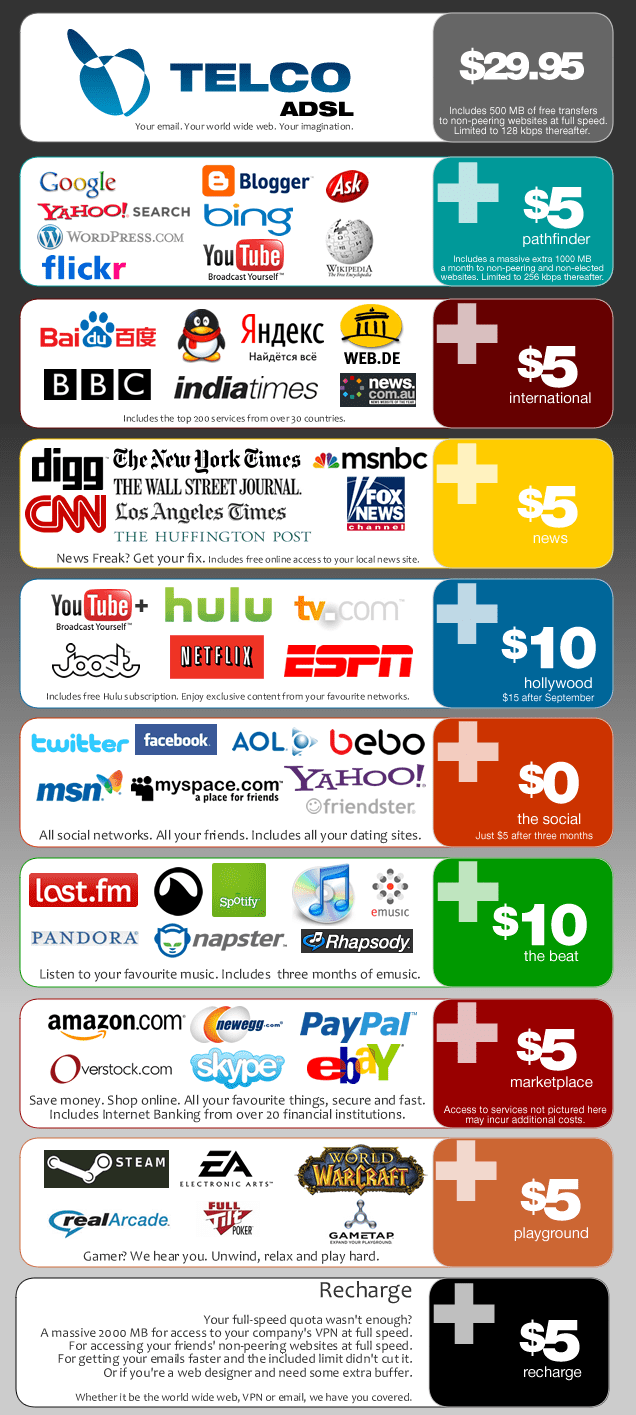
ISP’s wanted websites to pay them a fee in order to be accessible or at least not throttled, while also wanting customers to pay a fee to access sites/access them without being throttled. At least that’s how I remember it, it has been quite some time since I really went down that rabbit hole.
There was a cottage industry in elaborating the theory that Bush and his administration were unnecessarily caught flat-footed or even knew the attacks were imminent.
He seemed more interested in publicity and exaggerating his own bureaucratic importance than being objective—tendencies the political opposition and media were in no mood to criticize.
HTML diverged from SGML pretty early on. Various standards over the years have attempted to specify it as an application of SGML but in practice almost nobody properly conformed to those standards. HTML5 gave up the pretence entirely.
Everything that has and will happen due to poor working conditions after he broke the rail strike in 2022. The cause celebre was the East Palestine derailment, but conditions are still unconscionable, and it's hard to conceive of a situation where rail laborers are overworked and under-supported doesn't result in more, and worse, incidents like that one. And then, of course, there are the knock-on environmental and economic effects.
It's not the only objectionable thing Biden's administration is solely responsible for, just the one that came to mind.
Your taxi crashes because the driver skipped brake maintenance and his insurance doesn't reimburse you for your hospital costs because commercial transportation isn't covered. Sure would be nice to have some minimum requirements for taxis.
The moral issue is when the executives at Uber know with certainty that their driver compensation and incentives push drivers to neglect required maintenance on their vehicles.
Much in the same way tobacco companies knew for a long time how addictive and harmful smoking was.
And how Facebook knows they let their advertisers scam their users, and the way social media was pushing teen suicides higher. They knew and kept pushing policies which made the problem worse. All so they could collect bigger compensation packages.
Would they risk a taxi ride if they knew that Uber failed to properly background check a driver, who later kidnapped and raped one of his passengers, and Uber's response was to hire private investigators to dig up personal information on the victim in an attempt to discredit her? [1]
Small but significant. A Canticle for Leibowitz by Walter Miller comes immediately to mind. (And readers of this thread who did appreciate the religious themes of Hyperion may be interested.)
I had recommended Hyperion to a friend, and they loved it. I recommended Canticle as a follow-up and they hated it. I never figured out how that can be.


I wish I could find the reference I’m thinking of, but the idea was that Germans buying absurdly cheap wine and their constantly underfunded trains were part of a pattern of deliberate domestic under-investment to keep exports competitive.
Someone ITT surely knows more.
reply