>Look where everyone is looking and you'll find your answer there. It may not be in the same form as Google adwords, but the game is the same. Leveraging attention.
The chill that ran down my spine when I realized that you and TFA think that the part people care about is Google as an ad platform, and not as a way to access websites.
I actually don't care. Most people don't. We care about the quality of service. Aside from Google employees and shareholders, I assume that most users would prefer a useful service that barely makes the company any money, versus a money-printer that's useless and a PITA to use.
Neither of those are topics that are particularly complex, though.
And I realize that I'm taking the bait, but it's worth noting that the flip-side of the oversimplification of complex topics in modern news media is the affordance of notions of complexity to issues that are fairly cut-and-dry, when applying known and well-accepted standards to them. Solving housing issues in the US? Complex, though news media would have you believe that the answer is simply, "Build more." Is Israel committing genocide in Gaza? Simple, though biased experts spend enormous amounts of energy spinning extant circumstances that are readily accounted for in most definitions of genocide. Tariffs? Very well understood. Ending Russia's invasion of Ukraine? Apparently a bit more difficult than flooding the country with weapons and finger-wagging at Vladimir Putin until he stops being bad.
Note also that this isn't predicated on the existence or non-existence of social media as an influential force. It's simply a matter of whether or not the corporate and political interests that steer public discourse find it useful to complicate or simplify a news story.
Obviously it's not instantaneous, and you still have imports wanting to fill the vacuum, but a collapse of the US auto industry means 1) lower replacement rate in the near term as the remainders try to ramp up production, 2) difficulty servicing the legacy fleet, and 3) a massive blow in terms of sentiment and outlook. In this hypothetical, an American institution blew itself up and made a lot of people's lives more difficult. Do you think they earn that trust back easily? Or is it a post-bust clarity moment, where people finally have a moment to think about how much money is poured into their personal cars and auto infrastructure writ large?
Because, I mean, we did see something similar to that with the pandemic and a mass shift in perspectives on work culture, which corporations had to fight mightily to hobble. You also saw a similar shift during the Great Depression, and it took banks literal generations to rebuild their reputation with the public. In both cases, you saw massive ramifications for the way in which people lived.
I do think that no auto bailouts in 2008 ends America's love affair with the car as we knew it. So, yes, fewer cars. Or maybe, at least, different cars.
I already addressed that. It takes time to ramp up production. In the meantime, Americans would have wanted action on the part of their political reps. The obvious out for those reps would have been expanded mass transit, as production costs and timing for a bus or train are going to be more advantageous than the amount required to put the equivalent number of people in cars.
If you want to pass judgment, please try to understand the argument first.
It seems extremely presumptive to think the thousands of jurisdictions across the US would somehow bid out, contract, receive, and begin operating fleets before Toyota et al simply scaled up or redirected shipments.
The much more specialized, lower scale, less adaptive manufacturers of public transit vehicles would face an even more severe form of the same problem Toyota would have, except they'd encounter it after years of normal procurement slowness.
That seems very unlikely to me. I think these car companies would all have been purchased for pennies on the dollar, likely by foreign companies in part, and would be making just as many cars today.
It depends. Part of the calculus for the original bailout was the homeland security aspect of potentially turning over companies and the market to foreign competitors, which doesn't go away just because the federal government misses its window to save GM et al. I don't know that such a purchase is a quick process. Either way, it's disruptive to production.
Zero incorporation of externalities. Food is less nutritious and raises healthcare costs. Clothing is less durable and has to be re-bought more often, and also sheds microplastics, which raises healthcare costs. Decent TVs are still big-ticket items, and you have to buy a separate sound system to meet the same sonic fidelity as old CRT TVs, and you HAVE to pay for internet (if not for content, often just to set up the device), AND everything you do on the device is sent to the manufacturer to sell (this is the actual subsidy driving down prices), which contributes to tech/social media engagement-driven, addiction-oriented, psychology-destroying panopticon, which... raises healthcare costs.
>Prices for LLM tokens has also dramatically dropped.
buzzer sound is an incredibly obnoxious way to start a comment and all you did after that is present yourself with exactly as much dignity as you deserve in return.
"Reminder" is just as patronizing and probably the cue I was responding to. I don't regret it, because on top of meeting his "obnoxious" framing with my own, the substance of my reply was also more correct. Your busy-body response was even less necessary and I hope that my refusal to take a conciliatory tone vexes you further. Have a nice day.
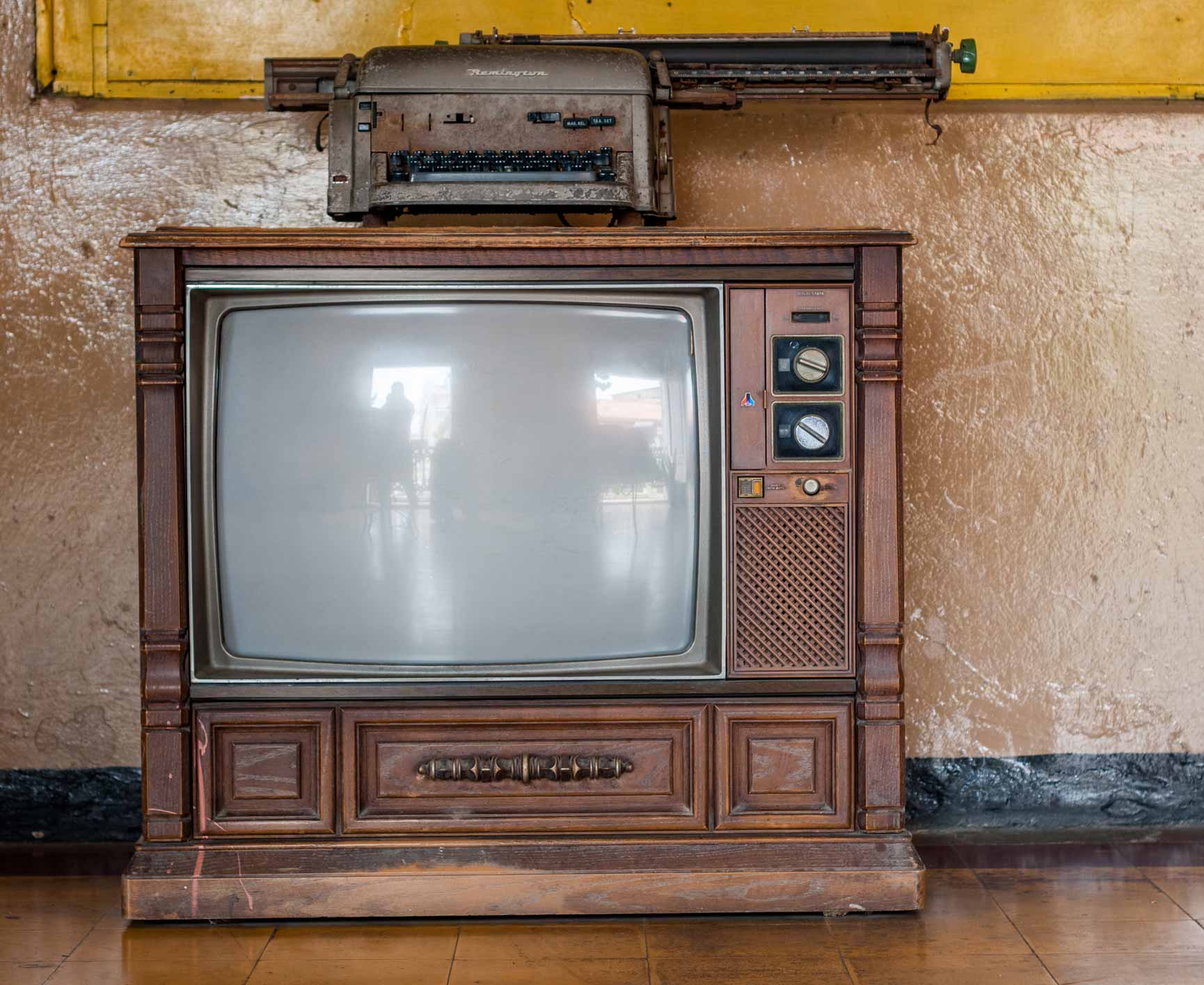
>When you see a device like this does the term 'sonic fidelity' come to mind?
Your straw man is funny, because yes, actually. Certainly when it was new. Vintage speakers are sought-after; well-maintained, and driven by modern sound processing, they sound great. Let alone that I was personally speaking of the types of sets that flat-panel TVs supplanted, the late 90s/early 2000s CRTs.
There is a certain class of American that rides the knife edge between credulity and contempt in supporting and accepting the activities and intent of bad actors who pledge to get rid of the things they don't like and they people they detest. They're ever-ready to believe the barest of excuses and to hand-wave the worst excesses in this regard. Today's anti-woke are yesterday's McCarthyists, and history will note the echo.
The selfish kind. Unfortunately that seems to be the end goal of the American dream: "I got mine, fuck you." I can't tell you how many times I heard the "protect my family" argument from people I never thought would vote for that clown.
But people do come here specifically to be selfish. They like that they can be selfish here in ways that are socialized away in other countries. They like that they can even socialize their selfishness, forcing poor people to subsidize the rich.
They are typically uneducated victims of the largest and most well funded mass propaganda brainwashing campaigns in the history of mankind, to be fair. Forgive them, for they know not what they do. The perpetrators of the misinformation, however, know exactly what they’re doing.
I think this misrepresents the situation. Many of these people are well-educated and affluent. In fact, such efforts wouldn't be possible without the support of the wealthy and academic elite, including on the left. Stooge-of-the-month Ezra Klein is decried as a woke liberal by certain segments of the political sphere, and yet he's running interference against those who support forcing the affluent to give back some of their recent outsize gains (through his "abundance" tripe). It's not poor, rural red-staters listening to his message.
> Many of these people are well-educated and affluent.
That does not preclude them from being uneducated and gullible to brainwashing. In fact, there is a strong case to be made that being well-educated and affluent primes one to become more likely to be uneducated/brainwashed. When you are well-educated and affluent, the "yes men" show up and start to make you feel like you know everything, and it becomes really easy to lose the skepticism and awareness that one normally has.
> It's not poor, rural red-staters listening to his message.
Was there something to suggest that it was? I see no mention of this group anywhere.
>Did big businesses in the West really think “investing” in China would lead to “freedom” and such?
BDS is a thing. It toppled South Africa's regime and makes Israelis gnash their teeth. Part of the "sell" for investing in China, and buying Chinese products, was that we were bringing them Capitalism, which would bring them wealth and freedom. The alternative is that you're fueling a Communist regime that is going to become your rival and adversary. Maybe I'm mixing up which was explicit and which was implicit, but there's no way Americans would have been on board with everything if the latter was seen as a real possibility. So either big business knew and suppressed it, or they genuinely themselves believed that they could do business in China and not support strengthening the CCP. (And, before Xi rose to power, that was not an completely unreasonable thought.)
Interested layman here: IIUC, immunotherapy is currently the holy grail for difficult-to-treat cancers like pancreatic. There are designer mRNA vaccines available that have ridiculous efficacy, but they must be tailored to each individual and so are extremely expensive (and are currently undergoing trials). mRNA COVID vaccines have been shown in some studies to increase the lifespan of pancreatic cancer patients. So, it's not hard for me to imagine that a treatment that gives the immune system a crack at learning to identify and destroy pancreatic cancer cells will boost survivability.
Part of the freak-out about the Trump admin's attacking of scientific research (including, especially, of mRNA research) earlier in the year is that it threatened these trials.
I wouldn't even say medicine. Neither Baby Boomers nor the current American healthcare system have 30 years left in them; that means that, unless you're already in your 40s or 50s, you're going to see the bottom fall out of that sector mid-career.
This is a political failure. It has nothing to do with individual decision-making and everything to do with poorly-managed incentives for appropriate 21st-century investments.
If you make a lot of money doing something that makes the world a worse place sometimes, and your goal is to simply "not starve," you can probably find something else to do which fulfills that requirement while also making the world a better place instead.


The chill that ran down my spine when I realized that you and TFA think that the part people care about is Google as an ad platform, and not as a way to access websites.
Jesus fucking Christ, things are bleak.