It's impressive. But there's a few things I want to see:
1. CPU performance over power consumption and heat dissipation. The A73 pushes for power efficiency, how does it perform in that arena [1]?
2. We've seen "experimental results" from hardware manufacturers before, let's see them independently verified. Those numbers could be margin-of-error [2].
3. Are those tests single or multi-core performance? If it has more cores and only just about edges ahead, that's not so impressive.
4. Does it need cooling? If not, how long can it sustain performance without throttling? That'll surely limit applications if so.
I would add, at what volume will it be produced? Prices can only go down if volume is high.
Also memory speed (both Hz and cache structure) is much more of a bottleneck than CPU clock. Specially with 16 cores!
2 Gflops/watt is the peak of electric transistor CPUs, if they come close to that; with a volume close to Raspberry 4 and use DDR4 memory with ample cache they might have a shoot at server cluster competition.
They will need many years of improving the software stack though, so they have a long uphill battle waiting.
The trick and fallacy of these days of non improving electronics is to aim for the stars (12nm of what) to get that last market share before saturation.
After that planned obsolescence and fragile 5-7nm chips will flood the market. Finally the chips will probably be manufactured for peak performance and longevity but they wont be sold, only rented!
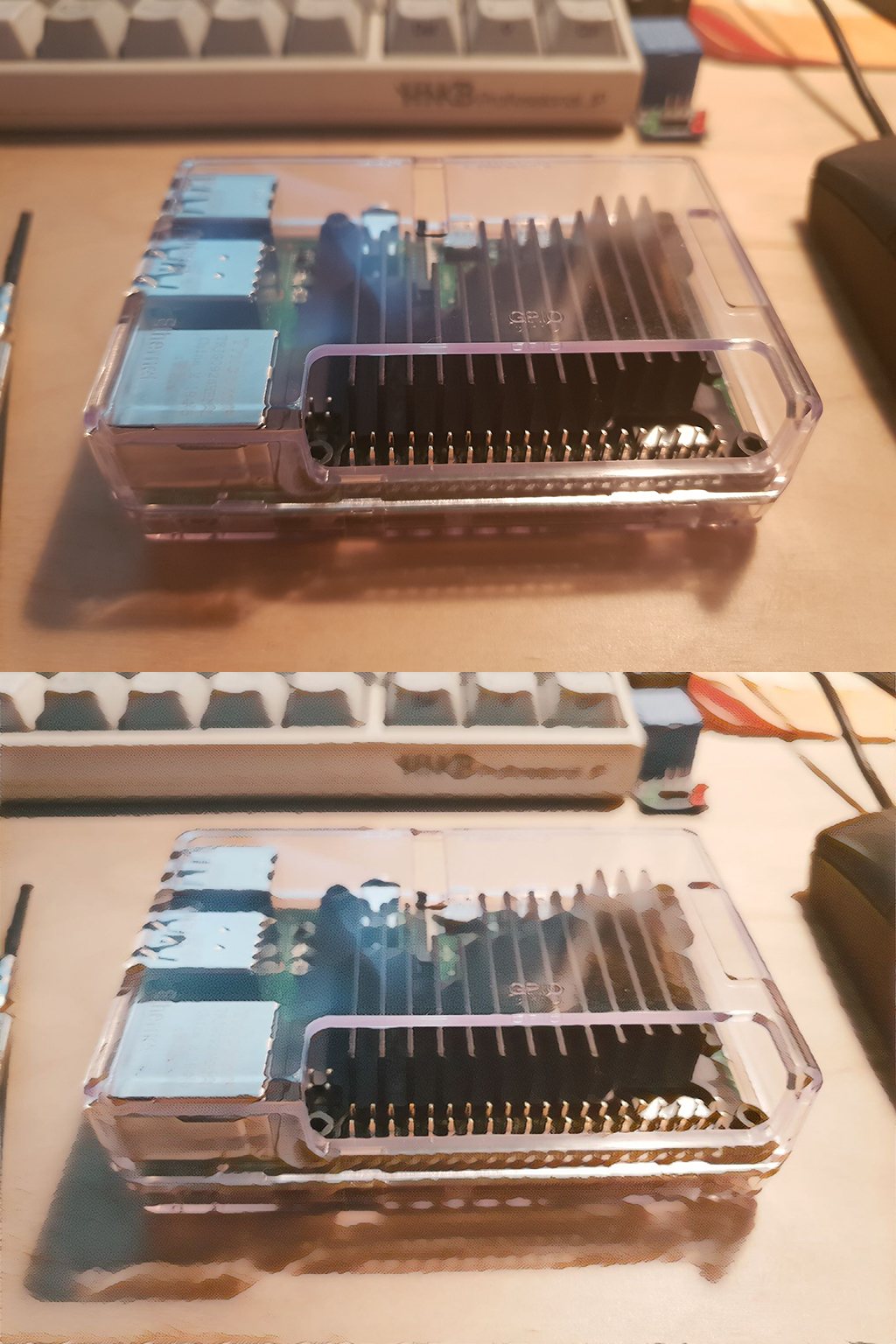
About cooling, the right heatsink is the solution: I found these for my Raspberry 4's, AFAIK they are the most compact stackable passive cooling for peak 2Gflops/watt under 10 watts in existence: http://move.rupy.se/file/pi_4.jpg
> Also memory speed (both Hz and cache structure) is much
> more of a bottleneck than CPU clock. Specially with 16
> cores!
Very good point! Packing more cores onto a die is not enough... Again it would be good to see if those benchmarks were single or multi-core performance.
> They will need many years of improving the software stack
> though, so they have a long uphill battle waiting.
Yeah... Getting kernel support, etc, takes some time. They'll also probably want to build out some dev board platform if they haven't already.
> Finally the chips will probably be manufactured for peak
> performance and longevity but they wont be sold, only
> rented!
I see it going either way, either cost per chip will become so low that they become an expendable product with a short life span, or the cost of perfecting them rises so high they are rented. Somehow the rented market for CPUs seems less likely, a release from your competitor could see your entire stock become un-rentable.
> About cooling, the right heatsink is the solution
Maybe, but you're not putting a passive cooler on solutions that go much higher than 10 watts at full chap. Assuming these cores match the ARM cores (power consumption and computation), they have double the number of them, therefore probably double the heat output. In reality it's probably even worse as the cores act as insulators to one another.
In 2+ years, let's see how they perform in the market. I guess irrespective of how good they are, the Chinese market is stuck with them unless tensions improve.
Long term on prices and yield yes. But since this is a strategic industry China needs to have domestically I could imagine subsidies being viable for a long time. Solar panels had a similar dynamic.
> The XT910 supports RISC-V 0.7.1 Vector Extension, includes a vector engine for AI acceleration and is based on 12 nanometer FinFET processes from Taiwan Semiconductor Manufacturing Corp.
In other words, it's still one Trump order away from not being able to manufacture it.
This story is going around like a firestorm, but reality is a bit different. They quote Dhrystones and CoreMark, both of which are terrible and should be avoided. By their own admission in Slack comments: "We have run the SPECInt2006 benchmark with -O2 compilation option. The performance of XT-910 is 6.11 SPECInt/GHz, which is ~10% lower than the 6.75 SPECInt/GHz delivered by Cortex-A73."
Also Cortex-A73 even isn't fastest in Cortex series anymore. It was used for example Snapdragon 835 (with some modification).
Latest Snapdragon 865 uses Cortex-A77 (with some modification) that is significantly faster than A73.
> Alibaba compared the chip’s capabilities with that of the Arm Cortex-A73, which is the foundation of Huawei’s Kirin 970 AI-enable mobile platform that was introduced in 2017.


1. CPU performance over power consumption and heat dissipation. The A73 pushes for power efficiency, how does it perform in that arena [1]?
2. We've seen "experimental results" from hardware manufacturers before, let's see them independently verified. Those numbers could be margin-of-error [2].
3. Are those tests single or multi-core performance? If it has more cores and only just about edges ahead, that's not so impressive.
4. Does it need cooling? If not, how long can it sustain performance without throttling? That'll surely limit applications if so.
[1] https://en.wikipedia.org/wiki/ARM_Cortex-A73
[2] http://3s81si1s5ygj3mzby34dq6qf-wpengine.netdna-ssl.com/wp-c...