A lot of people point to 'crime rates in SF are not noticeably high' but one of the reasons for that is that everyone who lives in the zone knows to avoid the worst areas at the worst times, and there are a lot of bad times and bad areas. If average people were walking around these areas frequently, crime rates would be much higher.
This is of course really bad for local businesses. And yes, a certain fraction of the homeless population needs managed care in controlled facilities until they recover, but neither the city nor the state nor the federal government wants to pay for that. Practically, that means there are areas of the city where homeless are ignored, and areas where they are chased out. If homeless people show up and start acting out in Pacific Heights etc., the cops do show up... it's just policing for the wealthy in that respect.
However, much of the rest of the city is really no different than anywhere else, but for some reason there's an epidemic of opiate use down around that Mid-Market area and that's also where the worst of the mental illness episodes seem to take place, i.e. people screaming their heads off at all hours for no apparent reason. It's too bad, for some years that whole zone was seeing an economic boom and was getting a bit nicer.
The shitty drivers are really the greatest threat to public safety across the rest of the city at present, something about the end of the pandemic has turned drivers into imbeciles it seems. (Homicides are about twice the level of auto-related deaths, but the reckless and drunk drivers are everywhere, not concentrated in the worst areas).
I suppose the organized gun-armed gangs of smash-and-grab car thieves targeting the tourist zones are part of the problem, in their nice cars with the removable license plates, but the cops are apparently too worried about their image to do anything about that. Bait cars could be an option, but then they might have to shoot somebody, which would be bad PR. Their mentality seems to be, "why risk it?"
All the major US cities have this problem. San Diego has always been pretty bad because it’s warm year-round, but we were just in Texas and Austin, Dallas, and even Houston have the same problems. We actually got low-key chased by a drug zombie trying to walk around a recently-gentrified “nice” downtown area at night.
> Dorsey announced he will introduce new legislation with Supervisor Catherine Stefani to amend the City Charter and get the Police Department fully staffed within five years.
The implication is it will fix things and then maybe businesses will return. But why did they tear it down and reduce staffing to start with? What did they expect to happen? Can’t imagine as soon as COVID hit they said “no need to worry about crime anymore, let all these officers go”.
Then what was Whole Foods thinking? Shouldn’t they have done some kind of study to analyze that particular area before opening a “flagship” location there just a year ago?
I guess it could have been a case where everyone in the decision chain might have see the train wreck coming but nobody wanted to raise their hand and object. The only way out is to let the train wreck happen. That wouldn’t be too outlandish, I’ve seen similar things happen.
That corner is well known as one of the worst in the city. The first time I ever saw someone OD in person was directly across the street - dude was slumped over in the classic fentanyl lean when I went in, and by the time I came out there was another homeless man yelling at people asking for narcan. Bunch of dealers (who I assume sold it to him) standing right by his body too, looking super nonchalant. Pretty surreal experience.
I think two blocks away, at 6th and Market, is sometimes thought to be scarier.
Although that same corner where the Whole Foods was was the first place I saw someone openly injecting heroin on the street while other people were watching (while the Trinity Place building was under construction a few years ago).
There are a lot of weird and intense juxtapositions right over there.
All the areas around the BART stations are very sketchy now too. Mission St is even worse than it was a decade ago. We used to hang out in SF all the time, taking BART in, which was nice as we didn’t have to worry about parking and all the homies from around the bay could just jump on and meet up in SF. No one wants to do this anymore because every time riding BART is a thrilling experience of “is this dude going to stab us or is he just trying to smoke something?”, then the stations are like a round of Left 4 Dead. I love the Bay Area and really want to see this fixed, and it’s been extremely frustrating watching it get worse. Also frustrating are all these companies demanding that folks come back into the office, for no discernible reason aside from making good use of their overpriced commercial real estate.
Really does feel like a “doom loop” for San Francisco. Who will write the definitive book on how everything went downhill over the past 10 or so years? Michael Lewis would entertaining. Or maybe it’s a job for Matt Levine? Who else?
Maybe the city could implement some sort of "Sanctuary District", a walled-off ghetto that is used to contain the poor, the sick, the mentally disabled, and anyone else who cannot support themselves. It would be right on schedule for 2024.
At this point, I would not be shocked if someone unironically proposed it as a potential solution. It's even happened before with japanese americans being sent to internment camps.
Launch a "Gentrification Relocation Program" for the ultra-rich, where they're given an all-expenses-paid trip to Mars, solving Earth's issues one rocket at a time.
Create a "Homeless-themed Escape Room" to help tech bros gain empathy and understanding of the struggles faced by the less fortunate, all while working on their team-building skills.
Establish "Adopt-a-Billionaire" initiatives where the homeless can select a wealthy patron to support their journey towards self-sufficiency, with the added bonus of receiving personalized financial advice.
Develop a "Homeless Monopoly" board game that highlights the systemic barriers faced by those in poverty, with bonus spaces for empathy-challenged players to experience unexpected setbacks and financial ruin.
Initiate a "Hunger Games: Empathy Edition" competition where participants are placed in a simulated environment of scarcity and adversity, forcing them to confront their lack of understanding and support for the less fortunate.
Japan has somewhat of a "sanctuary district" in Sanya, Tokyo, it's been an area for those left behind for a long time as I understand it.
People in need tend to congregate around help services provided by the city, and Sanya has a lot of those services. It is unclear if homeless are "moved" to Sanya or if it is just a natural place for them to end up, because of the mentioned services. Housing, food and vending machines are also extra cheap in Sanya.
The situation for homeless Americans is a lot more dire than living in Sanya, from an outsiders perspective. I don't envy having to sleep in SF streets.
I read Sanfransicko, and thought it was interesting (although not completely convincing). It did help me create a mental framework to understand what happened in North America as a whole while I lived abroad.
I definitely would be interested in seeing all of the missed opportunities and failures in prioritization; that would require a reflective insider, which seems unlikely in the near term future.
I really hope you didn't take the book that seriously.
Shellenberger's central thesis is that addiction, mental illness, and "disaffiliation" are the primary causes of homelessness. However, this oversimplified view ignores the complex interplay of factors such as affordable housing shortages, job loss, and systemic inequalities that contribute to the problem. By focusing solely on progressive policies, Shellenberger turns a blind eye to the broader socio-economic context that has given rise to homelessness in the Bay Area.
The book's methodology is highly suspect. Shellenberger relies heavily on secondhand accounts and outdated ethnographic studies while failing to engage with the current experiences of homeless individuals. This glaring omission undermines the credibility of his analysis and reveals a lack of empathy for those affected by the issue.
Shellenberger's penchant for exaggeration and misrepresentation further erodes his argument. He is quick to criticize progressive approaches such as harm reduction and housing first policies but offers little in the way of evidence-based alternatives. Instead, he proposes vaguely authoritarian solutions that betray a deep-seated ideological bias.
Ultimately, the book's distorted portrayal of homelessness serves only to fan the flames of the culture wars.
Is this a ChatGPT response? I ask because the first sentence I literally say "Interesting, but not completely convincing", which makes it clear I don't consider it the final word on the subject.
I don't necessarily agree with the book, but I feel I need to respond.
- Criticizing something doesn't imply offering a solution. This has been a bedrock of philosophy and discussion from Socrates. So let's dispense with that first.
- Two, I'm not part of any political religion and I don't consider single-handed critiques of any group to be a problem. Considering that so much slant is added to my information from progressive sources, reading an alternative perspective is helpful.
- A lack of empathy is thrown around loosely, especially in certain circles, but frankly I don't think that's fair. How much empathy do you think is required for a situation where people are engaged in activities that are harmful to themselves and others?
- All government-imposed solutions are "vaguely authoritarian". I'm not an anarchist, I don't see why this should bother me. To take a separate example that you would agree with, repealing zoning laws at the state / provincial level and forcibly changing the characteristic of a neighborhood is fairly authoritarian measure (as it strips local autonomy) but we accept its necessity.
- What does exaggeration and misrepresentation (the start of your paragraph) have to do with criticizing "progressive" policies?
- Can you clarify what you mean by an "ethnographic study"?
- Many of your criticisms seem to be based on vague allusions to things in the book, can you offer concrete examples?
I'm willing to be convinced that the book is complete nonsense but not by the arguments you are presenting.
It's unfortunate that instead of addressing the points I raised in my response, you've chosen to question my authenticity as an HN member. The book propagates misguided notions that stem from a privileged perspective, which views poverty as a choice and supports harsh legal actions against the destitute. I believe my original response provided clear and cogent arguments, and considering your unfounded accusation, I don't see the value in continuing this discussion.
"Please don't post insinuations about astroturfing, shilling, bots, brigading, foreign agents, and the like. It degrades discussion and is usually mistaken."
My initial response was clear and specific. Rather than addressing my main argument, you assigned me a task/homework. I take your assumption of me being a bot as a compliment, as I've been striving to enhance the professionalism of my HN comments, particularly in discussions with strong opinions where emotions run high.
If you read it, or had first hand information, it would be easy to share meaningful details about what, exactly, is wrong, instead of vague pandering that seem to be generated by a language model.
Even this response reads like a response from such a model.
I haven't read Shellenberger myself, but if his thesis is that homelessness is primarily caused by addiction, mental illness, etc., and not housing unaffordability, then from the empirical data I've heard of, I would have to disagree.
> Because unlike poverty and mental illness and drug abuse and weather and welfare benefits and other factors, the places that have the highest housing costs, and the least housing supply, have the largest homeless populations:
> [graphs]
> In literally any other realm, this would come as no surprise. You can’t have what you can’t afford. If someone says, “I want a $2000 laptop, but can’t afford it,” nobody would find that hard to believe. But if someone says, “I really want the single largest and most crippling expense known to man, housing, but can’t afford it,” for some bizarre reason people would say, “that’s not true!,” or “correlation isn’t causation,” or “homelessness isn’t a housing problem,” or something patently insane. As I said before, the topic of homelessness breaks people’s brains.
> The story of homelessness in America is perfectly captured by the following quote in the Economist:
>> Few Americans lived on the streets in the early post-war period because housing was cheaper. Back then only one in four tenants spent more than 30% of their income on rent, compared with one in two today. The best evidence suggests that a 10% rise in housing costs in a pricey city prompts an 8% jump in homelessness.
> And that’s just it: before modern-day homelessness, there was poverty, there was mental illness, there was nice weather, there was welfare, there were liberal places, and there were drugs. So, something must have changed. And what changed were the rents:
Nevertheless, it's entirely possible that San Francisco's other policies have exacerbated the issues caused by homelessness and housing unaffordability. I don't think it's too much to ask that the city should allow more housing to be built and that organised retail theft gangs be punished.
I figured it would be 200 pages of “and that’s a result of Reagan’s drive to shut down public mental health”
I very much doubt the visible homeless problem is a result of housing - the iceberg is a result of housing. The visible homeliness wouldn’t be solved if rent were half - that doesn’t treat schizophrenia
In this case Housing would be a preventive measure but it doesn’t deal with the problem that everyone truly wants dealt with: the mentally I’ll.
How do we solve the mentally I’ll problem? Is it that involuntary commitment with excessive oversight is incomparable with American values of freedom ?
Involuntary commitment was done away with as in the past the conditions in many facilties were super bad. Rather than reform the system they just shut it down. Now there's just nothing at all.
I think Reagan was an absolute disaster responsible for a lot of our problems today, but this isn’t one of them. Mental institutions of Reagan’s era were a humanitarian nightmare. But, I am not sure there is a humane solution to serious mental illness. It requires the attention and care that probably only immediate family members are capable of providing, while simultaneously requiring medical treatment and security that only mental institutions are capable of providing.
The problem we are having today is we’ve excused criminal behavior due to mental illness. I agree prison probably is inappropriate in most cases, but so is just letting them back on the street.
I would note, a bit late on the thread, the nightmare was mostly marketing on the anti mental health front stemming from a Nixon-Reagan continuum in the conservative movement of the time. My father is a phd clinical psychology and spent his early career doing fellowships and residencies in various public inpatient hospitals for the deeply disturbed (the folks you see on the street now). They were not like you believe, by in large, and the people who work in those environments largely work there out of human compassion, not avarice. My great grandmother worked as nurse in a Wild West sanitarium - now that was a different story.
If you dig into news about current inpatient care for the mentally ill, I think you’ll see something white washed but not too dissimilar to the past sanitariums. Heavily medicated patients confined to close quarters without much supervision and that that exists is unskilled providers, with 30 minutes or less of professional care a week. Patients frequently assault each other and because they’re often placed their by the police for criminally insane behavior there’s no recourse or different place to move them to just an upgrade to their charges. Sexual assaults are rampant by staff and patients. It’s barbaric, but even then, there aren’t enough beds so people in crisis have to wait months getting limited care through outpatient if they have find a psychiatrist with an opening- most don’t take insurance, and even then it can be a six month wait.
They were in some, but not all cases. Turning them out into the streets to rot in the gutter while they spiral out in their insanity is certainly morally more convenient, but not, IMO, superior to attempting to build an infrastructure that provides treatment and long term care for people suffering so deeply as this. Freedom that’s a living hell isn’t freedom, it’s just freedom from responsibility for caring.
A lot of seriously mentally ill folks burn their family care due to the extreme burden it places on them, and the fact a lot of mania and schizophrenia accompanies a willful belief in their own sanity and autonomy, and a lack of personal knowledge of their state. This makes keeping them under care and medications extraordinarily difficult.
Prison isn’t the answer. Mental health facilities is. That’s the real alternative to letting them back into the streets. Prisons aren’t equipped to treat anyone.
>”Freedom that’s a living hell isn’t freedom, it’s just freedom from responsibility for caring.”
The problem is that the latter is far too attractive and convenient for a large percentage of this country. Then simply move out of a city center, get some guns, put up some fences, and it’s no longer a problem that you’re directly personally affected by.
And most importantly in “free market”-loving America, lots and lots of funding that no one is willing to provide. When they inevitably break some laws, it’s easier for everyone to swallow their obscene housing costs under the guise of “we’re keeping these criminals away from society”.
> The visible homeliness wouldn’t be solved if rent were half - that doesn’t treat schizophrenia
By itself? No.
But literally every viable path to addressing serious mental illness requires stable housing as a prerequisite. Without it, there's literally no way to manage the problem - just different ways of shifting it around over and over again.
Anywhere within an hour drive of SF is extremely expensive, and without a car, extremely difficult to eke out a living outside of a major metro area even if they wanted to.
It feels like so many convos, especially here on HN, start from the false equivalence that homeless == mentally ill. It’s an issue sure, but not even a primary cause.
I’m sorry I think you misunderstood me. When I talked about visible / invisible and the iceberg of homelessness I referred to this exactly. However the issue in the discussion here is visible homelessness - the stuff that frightens people away from the downtowns of the west coast. Indeed the vast majority of homelessness happens away from your view and is no less tragic.
Reagan’s shutdown of mental hospitals is a big problem, but a distinct lack of housing and space is SF's problem.
California and other warm states, on a long timeframe, absorb a lot of homeless people -- only places you can sleep outside all year and, like, not die. Not an option for NYC or Minneapolis. So inevitably they have all of these people, and no place to put them. Nor the political will to crack down, since California Capitalists want things to be nice while still flogging the NIMBY-isms.
At this point, feces on the sidewalk /is/ part of the SF aesthetic, so in a way, by refusing to allow anything more than two or three stories to be built in many neighborhoods, they’re correct in that they’re preserving it.
Then again, it’s not like the high rises ever end up including a significant amount of affordable housing anyway, so that doesn’t even make a dent in the issue.
I lived in SF in the 1995-2002 time range and feces and used condoms and needles were literally everywhere even then. I’ve only ever seen this in SF in all my travels and places I’ve lived the country and world over, even places with severe homeless problems. It’s definitely a part of the charm - human excrement and Victorians.
I'm still not seeing why the present-day problems can reasonably be blamed on "Reagan".
Why don't Bush I, Clinton, Bush II, Obama, Trump, and Biden bear any responsibility? Or, in California, Brown, Deukmejian, Wilson, Davis, Schwarzenegger, Brown (again), or Newsom?
Why haven't any of those people undone what "Reagan" supposedly did?
Because of the act mentioned above. They presumably could have undone it, but the real damage was the dismantling of the public mental health infrastructure and the market economic approach to mental health via managed care that has turned out to be so disastrous. With the passage of the 1980 act the hospital networks were shut down and dismantled, and reimbursements via insurance for mental health were hobbled due to industry maneuvering despite many repeated attempts by congress to “fix” the loop holes exploited. The ACA actually did address the issues but by the point of the ACA decades of rot had set in - the hospital networks were long gone, mental health as a profession obliterated due to rapidly declining reimbursement rates (my father is a phd in clinical psychology with professorships and fellowships from Yale with an established private practice and hospital practice and saw his income go from upper middle class to upper lower class in 30 years, so he switched to doing evals for super secret government stuff). Even with the “fixes,” there’s no meaningful professional class in mental health - just a bunch of undergrads with a certificate, and even then not enough by a light year. But worse of all, there aren’t beds in facilities for the acute care people need today. Have bipolar and need inpatient care during a manic episode? It’s a multi month wait for a short term bed in Washington state, and the facilities are frightening and you’ll be co-habitating with criminally insane people. I know someone who was bunked with a serial rapist on trial - across the hall was two women who were gang affiliated schizophrenics on trial for murder and felony assault respectively). My friend was very well off with a well connected family. Doesn’t matter. Even then they could only house him for two weeks before sending him home deeply manic. They needed the bed for a criminally insane schizophrenic who had killed someone.
That’s why it’s Reagan’s fault. He set up the stage so effectively it’s taken this long to turn around the basic issue of payment, and now we have no providers or services or infrastructure left to pay for.
Would you say social security isn’t a part of FDR’s legacy because it passed through the hands of every president over the last 80+ years? Many have reviled it in that time but haven’t been able to dismantle it. It’s harder to build than destroy. The fact that it wasn’t until Obama we reversed coverage for mental health shows how enduring Reagan’s legacy is in mental health. But I would agree every president since carries a guilt for not driving redress, similarly every congress whose really at fault.
I don’t hold it was a utopia. But if you want to see something worse than Bridgewater, look at the streets and see humans rotting in front of your eyes in the depths of untreated, yet easily treated, mental illness. It’s certainly morally convenient to do nothing, and morally wrong to try and get it wrong - but I think trying and failing in some cases and succeeding in others is better than failing in all cases by default. My father and great uncle were both clinical psychologists in the public mental health system, and there were many institutions that were high quality and served a population we let simply decompose on our streets now. If we traded a non utopia, we traded it for a total dystopia.
Agreed about pandemic affecting downtown being the man culprit.
I wager SF was affected harder more than most downtowns due to high commercial rents, tons of startups that were nimble and moved, and lots of progressive big companies that are actually adapting to WFH reasonably well.
I wish commercial rents would drop significantly and more mixed use was permitted for new galleries, bars, clubs and residential.
I personally have hope SF will figure it out. It’s a town of constant change.
> I wager SF was affected harder more than most downtowns due to high commercial rents, tons of startups that were nimble and moved, and lots of progressive big companies that are actually adapting to WFH reasonably well.
Yeah, though I think it doesn't help that downtown SF has relatively low population density compared to downtown Manhattan. When the return-to-office plans started to kick in there weren't a ton of workers with very short commutes who were eager to be back in-office.
Because arresting drug dealers is not actually a thing that means that retail will have more customers in downtown SF. There's a legitimate discussion about having downtown areas be economically viable and pretending that if we "just" arrested all the criminals or whatever then things would get fixed is very dismissive of real, actual things that could be improved.
You need customers for retail to exist. People working for SF-based companies don't want to go to the office (you might make an argument it's for crime reasons, but it feels obvious the overriding reason is just wanting to work from home). So retail is suffering. Notice how crime plays at best a second order effect there. Yet every story on HN about this topic is filled with people saying it's crime.
I mean the place is already next to a bunch of houses. I'm imagining that all of those places aren't exactly empty. But of course this thing is built across the street from a Safeway (which feels pretty relevant to the lack of the success to be honest).
It feels just like there are so many more simple narratives here. Like seriously, there's a supermarket that looks larger and has a parking lot just there! Why would people bother crossing a 4-lane highway to go to whole foods? And so you're left with a huge supermarket that is trying to cater purely to foot traffic, outside of a place with that much of it to begin with. It sure feels like hubris meant this site simply did not work.
It just feels like such a stretch to claim that crime is the thing here.
There is neither a highway nor a Safeway nearby. Also, the apartment complex where the WFM is located (the Trinity Place) seems to have ample parking for retail.
are you sure you are looking at the right place? i don't see any Safeway close to 8th and Market and there are plenty of boarded-up abandoned houses on Market and the streets next to it. Also, have you just seen it? It's the stinkiest most repulsive part of town with a bunch of deranged people hanging out nonstop day and night on that corner there.
According to the article, the store was closed due to security concerns. There was no suggestion in the article that it was due to insufficient sales. Are you suggesting the company is lying for some reason?
It’s well documented from last year that Walgreens similarly used crime as their reasoning for closing stores but it didn’t at all hold up to real scrutiny
Walgreens’ CFO has said outright that the crime stuff was overblown , 2 years later [0]
[1] has a breakdown of the arguments for why this stuff doesn’t align with reality (“biased” of course, as it’s a media critique podcast, but I find their arguments convincing. I admit they confirm my priors)
“Safety” and “shoplifting” are of course not the same. And many people here talk about feeling unsafe going there. But people also mention it being empty! And there’s a Safeway across the street.
Companies like making money. Something tells me you don’t close down a massive store if it were making money. “Large supermarket without a parking lot in an area without much foot traffic” just seems like an expensive proposition.
as an amateur hacker news logician and avid rachel maddow watcher I believe it is because the comment is an example of the slippery slope fallacy, fails to note that correlation does not equal causation and also doesnt mention how 40 years ago ronald reagan closed the mental hospitals which meant CA could not enforce laws against pooping in the streets ever again.
1,537 police in San Fransisco is a bit below average per capita, but not dramatically so. It's goal of 2,100 officers puts it about equal to the nationwide average.
There may be a non-linear relationship. It's 1/2 the ratio as NYC.
Please remember that the legal city of SF is quite small, compared to the area you think of as SF.
I'm not sure if that national average is a good benchmark or not (maybe there is some sort of argument for how urbanized society has become) but my guess would be that there is some density factor. SF is something like 850k people pre-pandemic on 49 square miles. While it's not one of the biggest in absolute amount of people, it is the second(?) densest. I would suspect that a city of same population but 1/4 density would not need the same amount of cops.
update: I am guessing this is what your non-linear part is about; I missed that on first read.
It is the 21st densest city in the US, but most of them are small. NYC and Paterson, NJ (150k) are both denser.
I have no idea which way density argues. It means that cops are denser at the same per capita numbers which means their proximity to the highest priority should be closer. So faster emergency response. I don't know why a denser area would need more police, but I could be very wrong on that.
My argument (guess really) for why density necessitates more cops is that the opportunity for criminals also increases with density.
My thinking goes something like: a line of densely parked cars up Polk street with a bunch of people with their phones out at night making it hard to tell who is holding a flashlight probably means you need more cops patrolling the area to prevent crime vs my now suburban street with a few cars and no one walking at night means it would both be easy to spot opportunistic burglars and unlikely they'd hit up my street mostly for lack of targets.
I, too, could be wrong as I am saying this with no data.
You definitely need more cops to patrol the first example, but it also has far more people. It might take 20 times or more as long a street in the suburbs to get the same total people.
A new paper, The Injustice of Under-Policing, makes a point that I have been emphasizing for many years, namely, relative to other developed countries the United States is under-policed and over-imprisoned.
lock people up much longer and you don't need people keeping them in line on the streets. with the added benefit of not having to worry about national headlines in case barney fife decides to get extra beat-y
East of Chinatown is an interesting area. About 10 years about, the cops there had a pleasant way about them. They're still pigs and monopolize violence unequally, largely for whoever lives highest on Nob Hill or The Presidio. I bet they're glad they're not certain LA cops who are effectively unpaid UberEats for some residents.
The 2 large park areas act as de facto boundaries. The hills and major roads also split things up. Only the NE 2/3 of the city and county is really urban, taking the area of proper SF from 50 sq mi down to about 20 if that.
> Whole Foods Market
> 222 Google reviews
> Located in: UN Plaza
> Address: 1185 Market St, San Francisco, CA 94103
Never knew about this location, I have to say wow that was pretty bold of them opening in UN Plaza. Nice gigantic development at Trinity Place. Interesting to see the page is still up https://www.trinitysf.com/whole-foods/
Not being familiar at all with the situation in SF these days, is this really the reason for closure?
I've noticed a pattern of using whatever convenient trendy excuse (crime in SF) for leadership to avoid stating the real reason that might cause them to be accountable for a bad decision (perhaps a low grossing store due to poor location market-fit analysis). I'm quite skeptical now when reading these trendy rationalizations.
I used to shop there all the time - crime was a massive issue. And not just shoplifting either, pretty much every employee I talked to either had been physically assaulted or knew someone who had been.
> I've noticed a pattern of using whatever convenient trendy excuse (crime in SF) for leadership to avoid stating the real reason
Interesting, because I’ve noticed a trend of people bending themselves into pretzels to avoid starting that crime is an issue.
Last week, a drug-addicted homeless woman gave birth to a baby on the street in SF like an animal. It's worse than a 3rd world country in SF these days.
That’s so terrible. When I visited San Francisco I was expecting a beautiful city, architecture, the hills, nature. But I was just saddened by seeing the homeless. They were in pain, suffering, some nodding of, some drinking and crying into their drinks. The whole city had an aura of sad desperation. None of the beautiful architecture or nature could make up for it. I couldn’t wait to escape from there.
This is horrible. I see horrible scenes in the city streets on a regular basis but seeing the picture of this poor tiny little baby on the pavement hit me hard.
It's disheartening to hear such stories, but generalizing San Francisco based on isolated events is unfair. Like any city, SF faces challenges like homelessness and substance abuse. Instead of making comparisons, let's acknowledge the ongoing efforts to address these issues and work together to foster positive change...
Apologies if my comment came across as callous; that was not my intention. I empathize with the tragic circumstances in the video. My point was to emphasize that we should work collaboratively to address the city's challenges, rather than generalize San Francisco based on isolated events. By doing so, we can strive to prevent such heartbreaking incidents from happening in the future.
"Ongoing efforts"? Like what? People standing around staring rather than calling an ambulance? The inconvenient and actual truth is SF isn't doing shit because rich people run America and don't fucking care. The other countervailing problem is the poor in America in modern times are too disorganized, disheartened, and lack the determined resolve to effectively bring change to their position. Hipsters with iPhones thinking they're edgy if they take a picture without permission of someone sleeping on the street if they tilt their camera at an angle is the level of involvement: insulated urban dilettantes vs. people with nowhere else to go.
1letterunixname, I understand your frustration and skepticism, but it's important to acknowledge that there are indeed ongoing efforts to address poverty and homelessness in San Francisco. Some examples include:
1. The Navigation Center program, which offers temporary shelter and connects homeless individuals to housing, healthcare, and other services in a low-barrier environment.
2. The Homeless Outreach Team (HOT), which proactively engages homeless individuals on the streets, connects them with resources, and helps them access emergency shelters.
3. Project Homekey, a state initiative that San Francisco participates in, focuses on converting hotels and motels into housing units for the homeless population.
4. The Eviction Defense Collaborative, which provides legal assistance and support to tenants facing eviction, helping to prevent homelessness.
5.The Rapid Rehousing program, which offers short-term rental assistance and support services to help homeless individuals and families quickly transition to stable housing.
While there is still much work to be done, it's important to recognize that efforts are being made by the city, nonprofits, and community organizations to address these challenges. We should work together, rather than point fingers, to contribute to positive change and uplift those in need.
Every single policy that "activists" enact do NOTHING for the homeless or addicts. They do nothing to help addicts get off drugs or address homelessness, all they do is maintain the status quo so that activist contractors can keep making money by using the homeless like farm animals.
SF is the bastion of far left programs and the situation has gotten exponentially worse. All they know is how to tax people and spend money but get no results. The homeless budget ballooned from $300 million a year to $600 million, and the results are demonstrably worse and crime has only gotten much much worse.
SF is a failed experiment that proves that these far-left policies of "Harm Reduction" actually increase harm, and all of the progressives get in line to fill their pockets with government money and all of a sudden realize they don't want to help the homeless.
It's disheartening to see such a myopic and misinformed perspective on the complex issue of homelessness and addiction. I personally know a number of former addicts who were helped by SF's compassionate approach to the issue. To claim that "every single policy" enacted by activists does nothing to help the situation is an oversimplification that disregards the multifaceted nature of these problems. Your sweeping generalizations about San Francisco's progressive policies not only lack nuance but also betray a deep-seated ideological bias.
It's essential to recognize that the increase in homelessness is not merely a result of "far-left policies," but rather a combination of various factors such as housing shortages, economic disparities, and systemic issues. Dismissing the entire progressive approach as a "failed experiment" is a narrow-minded view that stifles any potential for constructive dialogue on the matter.
Additionally, insinuating that all progressives are interested only in lining their pockets with government money is a baseless accusation that only serves to further divide the conversation. Your hostility toward progressive policies and activists detracts from any meaningful discussion about finding long-term solutions to homelessness and addiction.
If we are to make any progress in addressing these issues, it's crucial to engage in an open, honest, and evidence-based dialogue, rather than resorting to incendiary rhetoric and unfounded accusations. A more balanced and informed perspective is necessary to truly understand the complexities of the situation and work towards sustainable solutions.
Yes, let's be honest. More people have died from drug overdoses during the pandemic than COVID. There are more people dying from overdoses because of this disgusting policy than are being helped. It's a complete failure, and it's because of people that don't actually care about helping the addicts but keeping them in a perpetual state of addiction.
The woman who gave birth to her baby is a crack addict, that has delivered a baby that has no chance. The chemical damage done to this baby is on the order of killing her. And people just throw their hands up in the air saying "there's nothing we can do, but let's supply them all with an open drug market so that people can buy drugs freely." It's disgusting, SF is suffering, the addicts are suffering and who is profiting? The "advocates". The director of a homeless center makes $250,000/yr and meanwhile babies are born on the street. Explain to me how they aren't lining their own pockets?
The ONLY way to can explain $600 million per year being spent, and SF being in its current state, is through corruption and fraud.
Poverty porn is disgusting. Instead of helping by calling an ambulance, spectators taking videos of it to publicly shame individuals and give fodder for voyeurs to look down on the poor.
Inhumane conditions aren't unique to SF. Sacramento, Chico, San Jose, Oakland, and LA. These also aren't unique to California.
NYC, PDX, SEA, ATX.. take your pick. Same shit, different city.
I live about two blocks from the WF location in the article. I went there yesterday for the first time in a few months. I would like to be able to walk there and pick up groceries, but it’s very intimidating to do so. You have to keep your head on a swivel to stay safe. The anxiety and paranoia is not worth the convenience. I’ve never seen anything really major happen when walking over there, but the store is usually empty when I go, so I’m sure they’re just hurting because no one wants to go there.
I remember taking the train to the hotel from the airport when I worked at Heroku.
At one station, two kids were fighting and one threw the other into the train. No one at the station did anything. I was coming from Tokyo and the scene was so insane that I could only sit and record a video. Like I felt physically unable to move beyond bringing my phone up and hitting the record button.
I still watch the video sometimes and wonder if I should have done something.
Liverpool is getting pretty trigger-happy (where I am), but reading anecdotes about the US is just shocking. It's the frequency that gets me. But yeah, British stabbings are admittedly a shocker too.
Ah interesting, I lived in Atlanta some in the last few years but didn't spend that much time there; generally it felt like the city had a much better handle on crime and homelessness overall (in part due to easier densification in the central area and other parts inside the perimeter) than SF.
It's actually that bad. In basically any urban area of the Bay Area you're likely to see and interact with _violent_ mentally ill homeless people. It's worst in San Francisco, specifically in that area of town, despite it being the main street of the city.
The problem will persist until there is a major shift in local norms for policing and law enforcement.
A segment of the homeless can not be reached by social programs, and crime tourism is rampant.
The unspoken deal is law enforcement doesn't have to put themselves at risk for performative arrests, and the wider Bay Area doesn't have people pushed outwards from the city.
It's annoying that so many comments, depending on your tribe, try to pin the problem on one thing. Oh, it's because they're soft on crime. Oh, it's because Reagan shut down the mental health support system. And on and on.
The answer is: yes. It's all of these things. And all of the partisan, it-wasn't-us bickering gets us absolutely nowhere.
More housing needs to be built. Rezone everything.
Hire more police, bring back beat work. Prosecute quality of life crimes.
Commit those who are too mentally ill, or too addicted to proactively seek help on their own.
Violent people who have mental health issues need to be in mental asylums. This country doesn't work if lunatics and sociopaths run downtown of our most valuable cities.
The governor of California is starting an initiative to go to other states and lecture them about how poorly they are serving their citizens. It boggles the mind.
The crazy unrealists, who are cool with anarchy and looting, and aren't liberals in either a Haight-Ashbury or academic sense. They're pushing SF down the road to a predictable backlash of what neither Nixon nor Roger Ailes (Fox News) could accomplish: sell out their own beliefs for neuvo beliefs. Like WTF, man? You don't have to billy club shampoo people or roll MRAPs to stop mass looting. Some of the coolest cops in the world walk the literal beat past Vesuvio Cafe.
When people are fucking starving, fucking feed them.
When people are fucking homeless, fucking house them.
When too many people are fucking broke, raise taxes on the rich and aid the less fortunate more.
Nowhere else besides the most unequal countries in the world have such desperate poverty. And the gross mismanagement and lack of funding in proportion to the scale of problem.
I can speak first-hand on this issue because I experienced a period of about 8 years of semi-homelessness in the SF Bay Area. Except for SF due to compactness, there is essentially no proactive aid to street people. Aid is paltry, requires stacks of paperwork, regular wasted time, and treatment like a presumed criminal. An individual has to be essentially disabled AND unemployed/unemployable in order to receive a tiny amount of cash and a slight bit more that can only be spent on food but only at certain shops.
OK ok so maybe the free needles thing isn't working. The problem is that while the needles may be free, the drugs are not and how are you supposed to get money for drugs if you're on drugs? So I think what we should do is not just make the needles free, but pay people to take the needles so that they have money to buy drugs. This will reduce harm because people won't have to exert themselves by collecting cans or menacing tourists or stabbing asians to earn money.
San Francisco is the gold rush town. everyone comes to strike it rich. That includes the mentally ill, addicts, and unsheltered.
It's a crazy city isn't it. Please be kind. if everyone wants something and SF is the open place you go to get it, well it's a clusterfuck of people as is the reality of a clusterfuck of people.
My friend told me once, about USA that of course it's a massive shit show. We put it on the front door that we want everyone, and so we have to deal with... everyone. All races, religions, idealogies oh dear. and then people say how lovely Sweden is. i mean it is lovely, but it's a little easier to be lovely when everyone looks acts and believes all the same things in all the same ways.
I just don't want you to trash SF like it should be something for you to extract what you want from it. if you have bad things to say about SF, give us your energy to represent change. if you're doing that from Texas because "well fuck taxes" than you're just a transaction. and you're mean.
For that id say it's the simplest explanation: warm weather. so all west coast has it harder with unsheltered.
cities that are more progressive, like portland, sign themselves up for the worst of it, yes!
fwiw im a socal native, and not all west coast cities have unsheltered problems. but the solution is obvious: have no regard for human life. Irvine, Ca is "so safe" and pristine and lovely because it expels the riff raff outside of its borders.
So does Australia: 28% to the US 27%. I've also lived in SF before, and most of the junkies and crazy people had US accents. I really doubt it's international immigration that's the problem there.
what is your point, are you trying to argue for this statement of the parent, the reason why Sweden was even brought up?
> everyone looks acts and believes all the same things in all the same ways
then you are not making a good argument because clearly not everyone in Sweden looks and acts the same, considering the fraction of its population who came from overseas.
Grew up in the area and lived in SF for years. I, too, hated all those good paying jobs coming into the city bringing in all those people who were annoyed by our crime and shit-on-the-street ways! We really need to keep anyone out if where they currently live has inferior economic opportunities, amirite?
On the real though, this pining for SF's old status quo because it fulfilled some weird grunge fantasy is just getting old. Yeah SF was a grimy, shitty, somewhat cheap place to live filled with equally shitty art and crap bands. It was shitty all the way from the 1960's until the early 90's when a homeless guy wandered in the TV repair shop we were at in the mission and pulled a knife and me and my brother while my dad was at the counter. Maybe it was great before then and maybe a lot of the people there want it to be better. Sorry if you don't get what you want.
Bee Tee Dubs, bro, people from or who live in SF don't call it San Fran.
I lived there around 2005, only the mission and tenderloin where remotely dangerous to what seems to be 80% of the city now. I'm pretty sure there have been tangible changes to how the city is managed. Most cities didn't get this problem after the pandemic so that can't be the only factor. Regardless "reverting back" is not a good sign.
While the closing of a major supermarket like Whole Foods in Downtown San Francisco is certainly concerning, I think it's important to maintain a balanced perspective and not jump to conclusions about a "doom loop" for the entire city. Urban environments are dynamic, and they undergo cycles of growth, decline, and revitalization. San Francisco is no exception.
The pandemic has unquestionably changed the way we work and live, causing a shift in foot traffic patterns and affecting local businesses. However, we should also consider that this particular store might have faced unique challenges, such as its location in a neighborhood grappling with increased drug use and crime. It's possible that the company's decision to close the store is more a reflection of those specific circumstances rather than an indicator of a broader downward spiral for San Francisco.
The closure of this Whole Foods store is undoubtedly a loss for the community, but it should not be interpreted as an inevitable sign of a citywide "doom loop." Instead, let's focus on finding innovative solutions to tackle the challenges faced by the city and work towards a more vibrant and resilient San Francisco.


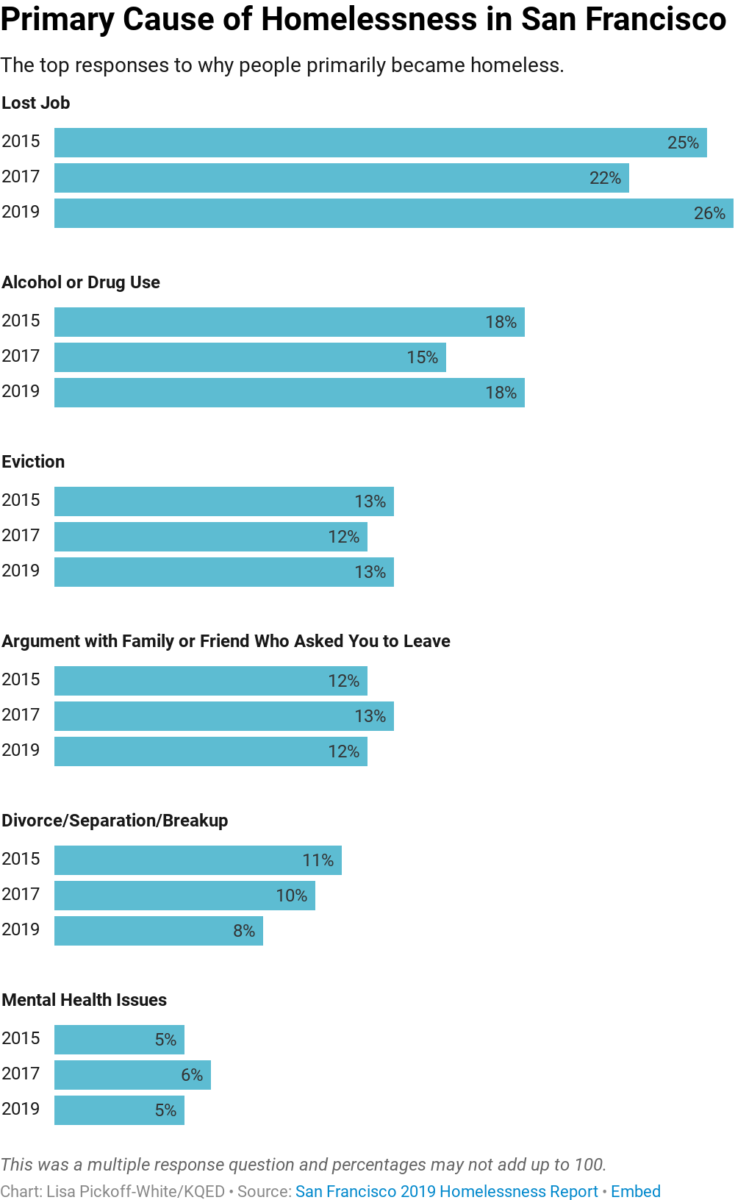
This is of course really bad for local businesses. And yes, a certain fraction of the homeless population needs managed care in controlled facilities until they recover, but neither the city nor the state nor the federal government wants to pay for that. Practically, that means there are areas of the city where homeless are ignored, and areas where they are chased out. If homeless people show up and start acting out in Pacific Heights etc., the cops do show up... it's just policing for the wealthy in that respect.
However, much of the rest of the city is really no different than anywhere else, but for some reason there's an epidemic of opiate use down around that Mid-Market area and that's also where the worst of the mental illness episodes seem to take place, i.e. people screaming their heads off at all hours for no apparent reason. It's too bad, for some years that whole zone was seeing an economic boom and was getting a bit nicer.
The shitty drivers are really the greatest threat to public safety across the rest of the city at present, something about the end of the pandemic has turned drivers into imbeciles it seems. (Homicides are about twice the level of auto-related deaths, but the reckless and drunk drivers are everywhere, not concentrated in the worst areas).
I suppose the organized gun-armed gangs of smash-and-grab car thieves targeting the tourist zones are part of the problem, in their nice cars with the removable license plates, but the cops are apparently too worried about their image to do anything about that. Bait cars could be an option, but then they might have to shoot somebody, which would be bad PR. Their mentality seems to be, "why risk it?"