A simple Hack that still works for me after years:
1. Place a tiny LED (red or yellow) by the side of your monitor or virtually on the screen corner. Basically anywhere almost bordering your field of view.
2. Make it blink like a fast heartbeat (120-150 bpm) and gradually slowdown to around 60 bpm (or your slow heartbeat base). Make the slope approx 20 to 60 minutes (you can adjust the best rate by testing in 10m increments after a few days in one setting).
Now...
3. Get to work regardless if distracted and agitated. Close all apps except what you need to work and BOOM!, let the magic happen. Without realising, your brain will try to sync with the light that you can barely see, calming you down and allowing you to go focus-mode with the task in had.
Works like hypnosis!
It is also a cheap hack... I build my unit with a cheap ESP32 and heart-rate sensor to sync deeper and dynamically adjust the slope...
Will explain better if any interest.
No science behind (only principles), I just hammered a solution like any Ape with the shakes would need!
- once the LED has slowed down to 60 bpm, do you keep it at that tempo for the rest of the day? for a few hours? do you ever go back to 120 bpm and then go back down?
- generally speaking, how did you come up with the idea?
- do you think that a software version (i.e. some blinking pixels in the top right corner of a monitor) would work, or is the intensity of the LED (i.e. the fact that it's not part of the monitor) part of the reason why it works?
- could you also talk about the heart-rate sensor - how do you use it / how does it affect the bpm algorithm?
- Once it reaches the lowest rate, the LED goes off after a 30min timer set, it fades the light over that time under the same blinking rate. So I won't notice.
- The Idea comes from desperation really, mostly curiosity on why sound beats from upbeat music had a effect to improve mood, i.e. work more at gym. Also the idea that your brain will take patterns and try to synch with. Check PubMed (few articles about)
- I started with a software version (v.1 and v2) and then a hardware one. No idea why, but hardware (as a side device) works really good. I 3D printed a tiny case and it is discreetly below my iMac screen powered by the USB. Look like an old modem but tiny.
Finally...
- I added the heart monitor (a cheap cable and wrist sensor) to see if I could shorten the time to achieve the lowest rate of blink based on my heart response instead of waiting the time or trying to read brainwave pattern (I try measuring voltage and electric wave form, from a headband I bought and returned after a rapid test) but the signal would mix with the work in front of me, so useless and expensive.
Using heart rate looks cheap, non-intrusive and effective to shorten the time, it goes 1/3 of time to get lowest, could use an apple watch vs cable and sensor but I'm cheap.
There was research some time ago (jeez, 10 years ago...) [0] [1] that used video and... computer vision algorithms to detect a person's heart rate without any devices. Wondering if it could be used here i.e. use your webcam instead of an external hardware sensor?
Other thing - would you be open to publishing/sharing your algorithm / esp32 code (on Github or as a blog article)?
We use this approach of video heartbeat detection on a real product (recruiting tool) but not for my hack ADHD device,
You can't really do video detection it in real time and properly, without overheating the cheap device. On the SaaS we did we use a recorded segment of video so we can analyse it afterwards, check the colour changes in the face of the subject and try estimate heartbeat with loose accuracy. More like high, Normal, Low after taking a few seconds as base.
The idea of the ADHD device was just a cheap hack done in a day for myself.
Not a product or commercial as I don't feel claiming it can do to others what I looks like does to me.
I'm definitely NOT attending an interview where this kind of tech is used. My heart rate is irrelevant to whether someone should hire me - and I say that as someone who doesn't even get anxious or nervous during interviews.
Not for interviews, video-applications, is used to sense stress and give extra points (not deducting them) if a person is indeed just too shy of being on video vs talking about something ; )
We use on video-applications when pre processing them, the idea is to sense stress levels when the applicant is introducing themselves at the start of the video and then not reducing their scores or points when the same person gets shy of being on video or forget something due to stress when talking about something else.
We try estimate a "confidence" level when saying something, but NOT able to guess if a lie. An actor can easily have full confidence in a script, but still be a lie.
We intended for roles that are client facing and where personal skills are key. Things like retail, costumer service, sales.... not technically or education based, temporary work and alike. Not that Orwellian yet ; )
Example: You need 40 people for an event to work a few hours as guides or hosts, from 100 applying the system can suggest a score and list them all in order so you can start watching or calling for interviews from somewhere.
I've developed an experimental ESP32 project that simulates a heartbeat pattern.
But I don't have a heart rate sensor, I used my normal resting heart rate as a basis for the simulation.
The project utilizes an ESP32 to create a LED blink pattern that represents a heartbeat, starting at a faster rate and gradually slowing down to a resting rate.
OMG. I could not do this. I hope it's useful to others, but not for me...at all.
The biggest distraction for me, when working/focusing, is movement at the edge of my vision. You know, like most websites with their moving ads, or fly-out videos that no one asked for, etc.
I'm glad you found your silverbullet, but that specific approach would wreck my productivity.
Your description is close to what I experience at times, that blinking thing may help you ignore outside the monitor distractions as it is there forcing you to ignore?
Interesting,
Do one and tell me ; )
I cost me $25 or less.... all spares ESP32 (most of them has a LED pinned anyways) and don't bother the heart monitor initially, just set time and rate of descent for the blink.
What if instead of a blinking led, it were a warm incandescent bulb, shaded by a diffuser? Bulbs have some on and off ramp time naturally but maybe this could be purposefully exaggerated so it pulses instead of blinks. Wonder if it would be as effective though.
Inspired by this post I threw together a new open source desktop app that has an annoying always on top window that has a flashing timer, this seems to accomplish the same thing. https://github.com/timsayshey/cringe-clock
Seems likely to be a placebo. You have a vested interest in it working, admit its not based on any sort of science, and one of the setup steps is to overcome distraction (which is the problem that’s trying to be solved).
> Seems likely to be a placebo. You have a vested interest in it working, admit its not based on any sort of science, and one of the setup steps is to overcome distraction (which is the problem that’s trying to be solved).
Fundamentally, if it works for the OP, who the hell cares?
And how would you even double-blind test this anyway?
> And how would you even double-blind test this anyway?
Get lights that either start fast and slow down or blink at speeds that randomly change then use serial numbers to track which lights are which, but send them out at random to test subjects?
you would blind the participants to the effect you are looking to measure. If they don’t know what to expect or what conditions there are, they can still get a placebo effect from random patterns.
> you would blind the participants to the effect you are looking to measure. If they don’t know what to expect or what conditions there are, they can still get a placebo effect from random patterns.
Maybe. Generally you'd do a manipulation check at the end to ensure that people couldn't identify what condition they were in.
Additionally, that's single blind rather than double blind.
The researchers can be blinded by not experiencing the intervention and handing out identical looking devices. You’re right that you would need a manipulation check at the end but this experiment is totally design-able properly.
I still think that the manipulation check would reveal failures of blinding, but yeah it is doable (but we needed a while to come up with a reasonable design).
And more generally, my philosophy (as someone with a PhD in the placebo effect) is that harnessing any expectancy/placebo effects in one's personal life is totally reasonable, and if it works for people and there's low risk of harm then more power to them.
We shouldn't gatekeep potentially useful personal treatments based on the gold standard. It's kinda the medical equivalent of YAGNI, I suppose.
Not to be too confrontational, but why did you feel the need to point this out? When someone has a solution that works for them, why possibly ruin it for them by pointing out placebo?
Mind you, pointing out placebo could be useful if the OP made the claim that their solution could cure a disease or something (such claims could discourage someone from getting effective treatment).
> When someone has a solution that works for them, why possibly ruin it for them by pointing out placebo?
You are likely aware of this already, but for others readers, it's important to know that placebos are still effective even when you know they are placebo. The term is "open-label placebo".
the first time I tried antidepressants I had this effect. I even knew about the placebo effect, and I knew they take multiple weeks to do anything. but yet the day after I took the first pill I started wondering if things were getting better and I was trying to deny it, but it felt like a change. (spoiler: it had the opposite effect and once they took effect I could barely get out of bed lol). It was just incredible knowing that it was placebo but still feeling the effect.
I wouldn't be surprised if you felt better even before you took your first dose; I can imagine you started feeling better just having a prescription in hand.
Imagine what it must have been like for "primitive" civilizations: "Oh my son, your hurt back has gone on far too long. I'm taking you to the tribal elder who will prescribe a remedy and do a spell. Once he finishes, all your pain will be a distant memory". And it works (for some duration).
Because it's a discussion about science and their comment is totally valid.
One of the biggest parts of placebo is going through the motions, whether you believe it or not. The original commentor appears to be aware that their approach may not have any scientific basis so mentioning the potential of placebo is fine.
I find music distracting when I work because I listen to it too actively, but I can imagine that a subtle regular pulse or beat might help. It would beed to be quiet and plain enough that it would not dominate my attention.
Even music without lyrics is distracting to me, but lyrics (if in a language I understand) definitely make it much worse.
Oddly enough, non-musical sounds (like birds or cars) don't affect me at all. I think it's the complex pattern-matching in music that is a problem for me. Of course, that's also what makes it so delightful to listen to.
For me it's more that the language processing centre in my brain is strongly single-threaded. Some non-verbal sounds do engage it, but there's a complexity threshold. Magpies chattering to each other do. Some classical music does, but not all by any means.
YES, it can be the placebo effect, but still placebo can works wonders ; )
I detailed better aspects on questions above, also not doing it commercially or claiming it can be helpful for anyone other than me.
In placebo, one needs to trust it will work (or see a figure of authority to believe it does), in my case I wasn't expecting much and got not far from it on v.1 (software), but by v.3 (hardware) I was surprised and used to it.
Yes, it could be the placebo effect, but placebo works wonders ; )
I detailed better aspects on a question above,
Placebo need you to trust it works (or see a figure of authority to believe it does), in my case I expect nothing and got not much on v.1 (software) by v.3 (hardware) it is surprising.
I believe there is research into rapid eye blinking followed by slow blinking causing the brain to "calm", so perhaps an external source has a similar effect?
I didn't look too much into it but I too have seen something long time past about patterns with light from a TV on some of those documentaries from the 80's, basically about people trying advertising with subjective flashes to induce a certain mood.
No really what I was trying to say but get your point.
The idea is that you sit at your desk even if too agitated and remove the visual distractions that aren't work so your eyes will either look at work or the blinking led. I have an iPad by the side so I can't see the screen but will open from time to time to check emails.
So, stare at the screen even if you don't feel like it and try 1o-15min.... if you forget and realised an hour passed and the blink stoped it... then it worked!
Yeah, but this blinking light is still at another level. I'm glad it works for the OP, but to me this really stood out as pretty absurd.
Sounds a bit like: I have a hard time falling asleep, so I have this blinking light next to my bed. I take a sleeping pill and let the magic happen. My heart rate then syncs to the light and I fall asleep. This light works great!
Yes, it could be the placebo effect, but placebo works wonders ; )
I detailed better aspects on a question above,
Mostly when I added the heart monitor, somehow I can measure that the time to lowest blink got shorter and I'm not paying attention to the device at all.
When I realise it us OFF I can see the logs and see how long it take vs the heartbeat to sync.
Also, I build myself so I like there was no marketing or product to trust, just test and adjust.
My daughter suffers from functional seizures due to FND and we do something similar with counting. When she is suffering from a complex motor tic we will ask her to count at a "comfortable speed" - which is always 100+ counts per minute. She will then slow down the counting until we reach 60 counts per minute at which point she has usually transitioned to a less intrusive tic or she has ceased ticcing altogether.
> I just hammered a solution like any Ape with the shakes would need!
This is an underrated approach. Following hunches and suspicions often leads to solutions that a pure evidence-based approach might miss or delay; especially if your suspicion goes against the prevaling wisdom.
Really interesting to learn about your solution for you daughter, great to see it works and appreciated the comment of my approach being an underrated one.
My case isn't anything as relevant as yours and maybe that's why I did not much of research, easy going for a crude trial.
ChatGPT got me a similar HTML based solution with this prompt (F11 for full scren):
Create a simple web page with a red blinking LED in the top-left corner. The LED should start blinking at 150 BPM and gradually slow down to 60 BPM. The initial size of the LED should be 40px, and it should completely disappear during the "off" phase. Additionally, include a red box shadow during the "on" phase of the blink. Please use HTML, CSS, and JavaScript for the implementation. Adjust the code as needed for clarity and readability.
Thanks! One new thing I learned after multiple iterations of: "That's great, but can you change this, or that". Once I was happy with the result, I asked it to produce the AI prompt that I could give next time to generate the same output, and that's what I put in my previous comment.
This got me so intrigued that I built https://github.com/vlameiras/tranquiled in order to have similar behaviour but in the screen itself. Nothing fancy, just curious to try it out!
Nice one! I will be curious to learn if that works for others too.
In my case v.1 and 2 were apps with a similar on screen red dot like yours. Much smaller and first placed at the status-bar (like the cock ":" blinking) then floating on screen lower left corner.
Things got interesting and worked best for me after I remove the light from the actual screen I must look at to work. Hence the device use, and then later the heart sensor.
The key (I guess) is to make you brain see it but not you (if that makes sense?). Something like you looking at your screen but can still see if an Ant moves nearby or your phone shows a notification. Near your screen but not on it ; )
In any case, great little test, and eager for any feedback you can get.
I just listened to a podcast, Huberman, that discussed how to improve your ability to task switch. Apparently, there’s some connection to how your mind perceives time. He mentioned an exercise to improve your ability to task switch that manipulates how your mind perceives time, switching back-and-forth between slowing it down and speeding it up.
I think the inability to task switch is a big part of ADHD and this thing you’re describing really sounds similar to what Huberman was discussing.
Now, I’m not a doctor and I have no idea what I’m talking about here. Every time I start talking about this stuff I imagine my doctor friend sitting in the corner of the room shaking his head (maybe some of you saying it’s placebo should do the same).
Thanks for this initial go at the blinking LED script! I went ahead and tried to add some quality-of-life features to this that I wanted. I've never used pyqt before, so I admit I had help from google and copilot figuring out methods. Anyways, here is an updated version that has a few more configurations for background color, circle color, slowdown period, graceful window resizing, and graceful shutdown.
Try doing one on a physical device too... My settings are just related to fade after reaching target or turn off immediately, Led colour (my ESP32 has a RGB onboard) and blink or pulse. Then there is a Start & Stop rate (150-60) as standard and IF sensor is connected or has data (heart) those values adjust too.
I have hundreds of things I do and very few go to product or build phase.
Not my view for this one as it is a personal issue. I would not be comfortable claiming it could do anything for others like it does for me. Also I'm not basing it on anything scientific other than raw experimental data from 1.
I'm happy to share it here and FREE for everyone.
I run a tiny tiny tech incubator in the UK, so hands full : )
No, I have hundreds of things I do and very few go to product or build phase.
For this personal issue, I would not be comfortable claiming it could do anything for others like what it does for me. Also I'm not based on anything other than experimental data.
I'm happy to share it here and FREE.
I run a tech incubator in the UK, so hands full : )
I explained above on another question, did started as Software (v.1 and v.2) but I guess my brain tried to ignore and sabotage the work on the screen, so I placed as a tiny device underneath (gotcha F brains!).
Like tricking the brain to see as not part of the work.
My guess is that may be working more like a simple "maestro" telling your brain orchestra and heart drummer to reduce the speed from Heavy metal to Ballad and that somehow makes easy to focus in what's in front of you?
I make no claims here, I did it for me and looks like it works, not scientifically based or proven, not even tested on more than 1. So, no idea if can or will work for you ; )
That said, I'm now curious with so many comments to see how it will perform for those building versions to test. Its a 20min project, free for those already with prototyping board around.
The key for me was to remove to my marginal angle of vision, not on the screen (like an app), the moment I moved outside and wasn't in front of it it work best. If you see it directly it does distract you indeed.
Nice tip. Thanks for sharing.
I'll probably try this by making a cheap one with one of my kids' microbits. This seems like the perfect board for doing this.
I didn't like the blinking at first, so I made it pulse instead (smoother) but was never to the point of headaches. that said, sound should work if you can keep a headset ; )
Anything you get aware that goes fast-to-slow in a smooth gradient is the idea.
I tried sound (beats) on a headphone with some tracks, then build a tiny app to show pixels on the screen (blink) and then settled on a LED on a prototyping board type of device (ESP32) as a quick project and that worked.
I only improved by adding the heart sensor months later, now I don't think about it much, Now even If I'm not aware of, every time I turn the iMac it powers the device via the USB and so it starts anyway at 150bpm when the heart sensor is not responding or not detecting anything. After an hour it gets to 60 and the light fades out....
I'm not aware when it goes off, so I guess it is working ; )
Few people here posted code, ideas and I added the device pic I used (similar) and the sensors... you can buil one with almost anything and try!
thank you for the correction. i blame one or all of fever delirium, lack of coffee, and allergy to math for this mistake. thank god i'm using a shitposting account.
oh sh*t. here we go again. another IoT that I would love to start and then abandon for some reason knowing full well how fix it but not find the "time" to do it.
Just use any blinking LED template code that your OEM offers for your particular board (ESP32 or alike) as it will be specific for the PIN the LED is wired and libraries available, etc.
Basically a function slope with a value from 150 to 60 that calls "blinks" over an hour, when at the end it turns off LED.
You can make it smoother, add the heartbeat sensor, make it pulse instead of blink, that stuff will be particular to whatever you have at hand.
GPT for such simple code after explaining the device and pointing to documentation should be a 3-4 shot process.
My one is horribly inefficient and shameful to share : )
I see, well in that case just search for ESP32 on Amazon and get one for a $5, then look for a few videos on Youtube who to program for a ESP32 board and you will probably learn as a first example something to control the board's LED. From that you will be half way, just modify and try things out ; )
Thanks for the complement,
I guess you would be a client (few comments)
I have hundreds of things I do and very few go to product or build phase.
Not my view for this one as it is a personal issue. I would not be comfortable claiming it could do anything for others like it does for me. Also I'm not basing it on anything scientific other than raw experimental data from 1.
I'm happy to share it here and FREE for everyone.
I run a tiny tiny tech incubator in the UK, so hands full : )


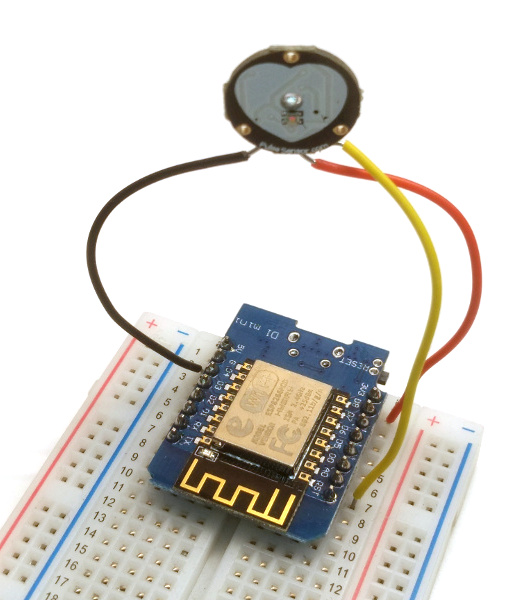
A simple Hack that still works for me after years:
1. Place a tiny LED (red or yellow) by the side of your monitor or virtually on the screen corner. Basically anywhere almost bordering your field of view.
2. Make it blink like a fast heartbeat (120-150 bpm) and gradually slowdown to around 60 bpm (or your slow heartbeat base). Make the slope approx 20 to 60 minutes (you can adjust the best rate by testing in 10m increments after a few days in one setting).
Now...
3. Get to work regardless if distracted and agitated. Close all apps except what you need to work and BOOM!, let the magic happen. Without realising, your brain will try to sync with the light that you can barely see, calming you down and allowing you to go focus-mode with the task in had.
Works like hypnosis!
It is also a cheap hack... I build my unit with a cheap ESP32 and heart-rate sensor to sync deeper and dynamically adjust the slope...
Will explain better if any interest.
No science behind (only principles), I just hammered a solution like any Ape with the shakes would need!