Why are Korean network costs so much higher? In the aughts Korea was famous for its internet infrastructure. How do other streaming services survive there?
Korea, pound for pound, has to be one of the most poorly legislated technology states in the world.
Everything is in absolute bizarro land in Korea when it comes to technology. Here are just a few of things I’ve encountered in Korea:
- You have to have a phone number to sign up for any type of account. (Hasn’t discouraged any toxicity either.)
- Foreigners can’t use things like delivery apps because they can’t make accounts due to the phone number thing or they can’t use their international credit cards.
- Most people own windows PCs because in order to do any banking in Korea you have to install software that is tantamount to the bank’s spyware on your computer.
- All mobile phones have non-mutable shutter sounds.
- Location services like find my iPhone are banned.
- cellular data usage costs an arm and a leg, making free WiFi a necessity at any business
- The quality of FaceTime calls is extremely throttled. For the longest time FaceTime just didn’t even work. KakaoTalk video calls never had that problem.
- contactless pay via Apple Pay was only introduced this past year
You’d think Korea would be bleeding edge when it comes to technology it’s far from a technocracy, It’s just a stumbling, bumbling, corrupt state that can only get out of its own way to clear space for the large conglomerates.
I feel so sad for the Korean people. What should be a thriving, entrepreneurship-driven economy is the exact opposite - an oppressive, corporatist hole that sucks up peoples economic dreams and emits zero-sum, despair-driven ambition.
> - You have to have a phone number to sign up for any type of account. (Hasn’t discouraged any toxicity either.)
While unfortunate, this is not required by the law. It is just that many Korean services abuse phone numbers to control users. A cultural problem, not a legislative one.
> - Most people own windows PCs because in order to do any banking in Korea you have to install software that is tantamount to the bank’s spyware on your computer.
Things have changed, and most banks support macOS too. Personally I don't mind them supporting anything, because smartphone bank apps work and it is more convenient than those of PC's.
> - All mobile phones have non-mutable shutter sounds.
It is not a legislation, but a voluntary restriction imposed by mobile carriers. I also hate it, but there's huge concerns among South Koreans regarding hidden cameras, and although I think those concerns are excessive and even paranoid, before the Korean people change their mind, the voluntary restriction won't go away.
> - Location services like find my iPhone are banned.
Only Apple's does not work. Samsung's and even Google's work.
> - cellular data usage costs an arm and a leg, making free WiFi a necessity at any business
I use an unlimited plan for 30 bucks a month in South Korea. I have no idea how much the carriers of other countries charge for an unlimited plan, but I don't think the current cost is too much.
> - contactless pay via Apple Pay was only introduced this past year
It was just because Apple and Korean credit card companies couldn't agree upon a fee. If legislation was the reason, why were there many contactlees pay services in South Korea before Apple Pay? Even China's UnionPay had been allowed in South Korea.
I assume you were angry because you could not use Apple's services in South Korea. Blame Apple's predatory strategy rather than South Korea, I guess.
All mobile phones have non-mutable shutter sounds.
Japan has similar legislation that came from men taking up-skirt photos in public places (trains, etc.). Workaround: Buy a phone overseas. It will still work on the Japan mobile networks. I assume Korea has a similar backstory. Please correct me if wrong.
It’s not entirely clear that the location stuff is related to North Korea. A lot of the heavily restrictive laws are done under the guise of privacy.
It’s funny how the two things you mentioned are related to a particular quagmire of mine which was that my baby son misplaced my phone inside our place in Korea. I had absolutely zero way of finding it. I didn’t want to buy a shutter-compromised phone so I just waited a month to buy a phone in the US.
It’s just absolutely bizarre that, in this modern age, an iPhone briefly going out of sight means losing it forever. (I think he threw the phone away, as he started to enjoy putting things in the trash can.)
Isn’t the location thing that if Apple were to store any location data, it would have to keep a lasting record of said data for the government to access instead of its 24 hour deletion policy?
Yeah, I've read the same, which is that Korea's supposed privacy policies actually decrease privacy and security because they mandate retention policies that, supposedly, Apple et al aren't willing to comply with.
It's like the whole ActiveX debacle. I just don't understand what's in lawmakers' heads.
Actually that is mandated by Korea Financial Telecommunications & Clearing Institute (consisted of banks).
Looks like it's mandated just to play a ping-pong game of "who is the culprit of this data leak" that usually concludes into user's improper installation of "Security Software".
Can‘t you do it the old-fashioned way and call the phone? If it’s on silent, it might make it harder, but it still makes a buzzing sound since it vibrates.
It's related to data sovereignty laws, I'd bet. South Korea is very VERY paranoid about the GIS data about the country, to the point that there are laws that basically say "if you get GIS data from Korea you are not allowed to export it in any way." The Korean language OSM page for mapping SK is an interesting place to start: https://wiki.openstreetmap.org/wiki/Ko:첫_걸음
It would not surprise me if "Find My iPhone" would have to be completely and totally rebuilt from the ground up in SK and run on SK infrastructure in order for it to not be considered exporting of survey data.
Every map of South Korea must be served from... South Korea up until a certain point. You can see this if you open up Google Maps and zoom in.
There's a special version of OSM that has military bases conveniently ignored for the purpose of in-country usage: https://tiles.osm.kr/
At some zoom levels in Bing Maps, you can see they're using a VERY old render, sometimes old enough that destroyed buildings are still visible or routes that no longer exist are still there. It uses American-style highway signs and with a high resolution screen such as a modern 4K panel you can easily see where the bitmap graphics that have been hauled over are falling apart.
Although an overseas Android phone will work on Japanese networks you won’t be able to use Google Pay. In order to use Google Pay you need a phone that has NFC-FeliCa support and only Android phones sold in Japan have it.
I'm in Japan now, and from my experience, that's incorrect. Google pay works just fine everywhere for regular payments. But you won't be able to use your phone to replace anything IC card related (like contactless payment cards for transportation).
iPhones support it anywhere. Newer Google Pixel (at least 5 and 6?) devices would need to be modded to Japanese SKU for it to work. Comes down to manufacturers having to pay Sony for it to be enabled and while FeliCa 4.1 supposed to support provisioning after the fact, they just don't have a system setup like Apple does.
> You have to have a phone number to sign up for any type of account. (Hasn’t discouraged any toxicity either.)
Note that this isn't just confirming that you have *a* phone number. They check who actually owns the number by phoning the mobile service provider which is tied to the national ID (which encodes date of birth, sex and before 2020, place of birth registration). Online age verification in South Korea is therefore quite effective, since they check the actual age according to the phone subscription (and in turn national ID) rather than just a "please don't lie" button.
Before this it was even worse; they straight up requested the entire national ID (unchangable except after 2017 under very extreme data-leak circumstances, subjective to review) before it became illegal.
This is weird how in just 15 years Korea has turned from the most Internet-enabled country and into this backwards state.
That happened to Japan on even earlier timeframe and I wonder if China will follow that path - whether we are seeing the top Internet-enabled China right now (in fact, a few years back before they started cracking down on gaming)
I wish it were more oppressive actually, like maybe they could arrest and charge people who take upskirt photos instead of tacitly accepting that it's normal and trying to make it impossible.
1. "Cross-Connect" fees when you connect 2 or more networks into any of your device (paid separately of ISP subscription)
2. Monopoly of "3 ISPs" that protected by law (No newcomers can join)
This all brings up to up-to 100 times expensive internet than Europe in Korea.
(not Residential, but for CPs. Residential internet services are cheaper, but if you operate any servers your service will be terminated.) fyi, I kinda estimate the twitch should pay upto 300K USD/mo. (if they got lucky and got "domestic business deal") to just make sure their service up and running
They do. You either pay Transit pricing or have settlement free peering (as in everyone pays his costs and the data exchange is free; as long as certain requirements are met).
Thing is: charging the data center/content provider above global average pricing and also charging the end customer for the same service again.


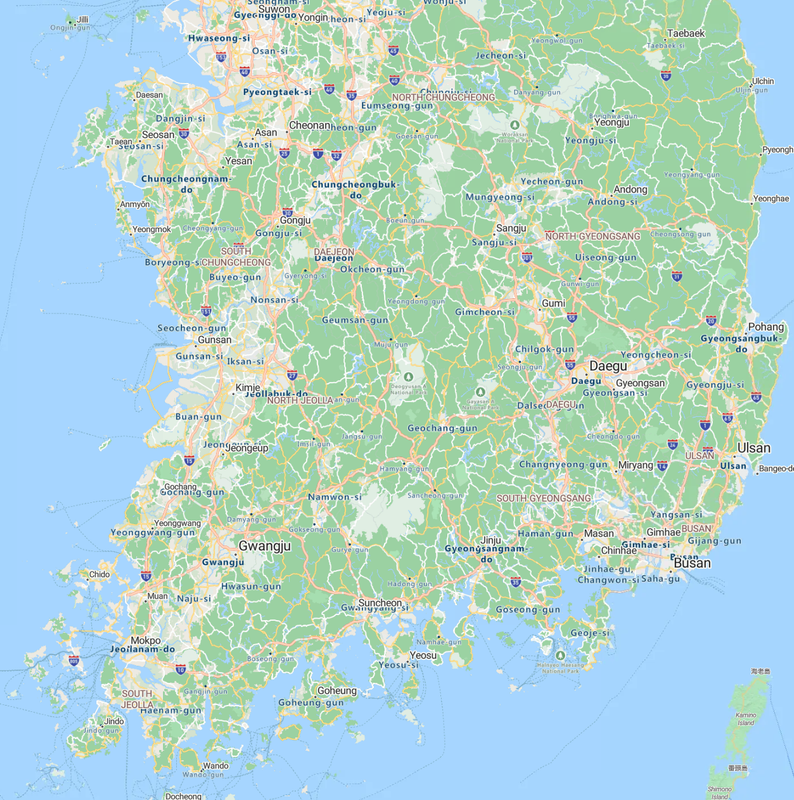
EDIT: I’m guessing this is related https://www.reuters.com/technology/google-netflix-under-scru...