Like Gmail is emails but not IMAP. It's fine. We have seen that these kinds of wrappers work pretty well most of the time considering the performance and simplicity they bring in building and managing these systems.
Grown in popularity is not really a metric. A normal tuesday and the day half the company's staffers got fired aren't going to be the same in popularity. Doesn't mean one is better. Twitter is definitely more popular for all the mess they've made, yes.
The "narrative" was right. There are actual outages now unlike earlier. It's not like twitter engineers were holding up the servers to the light for there to be outages the moment they're gone. Systems run on their own just fine, until something does go wrong. And if there's nobody there to fix it, something usually small blows up. Enough of these and users start to notice degraded performance and outages.
Everyone who is a manager actively makes independent contributions for a not-insignificant portion of their work-week.
So, when we have 1-on-1s with them, we can actually discuss improvement avenues from the same vantage point. Not some spreadsheet pushing manager who has no clue how to measure engineer-productivity or performance.
When they do code reviews, their comments serve as an important learning opportunity, pointing out good practices/conventions, etc.
And finally, when you disagree, it's backed by the validity of your points as 2 engineers, rather than their authority as a manager vs you, their direct report.
As a manager I typically let the employee lead the 1:1 discussion and we are agile so status of work isn't really useful since that's done at standup. What would your ideal frequency and topics be for a 1:1? Do you expect productivity or performance for software engineering to have measurements?
My ideal 1:1 is about once a month. Especially in high-ownership teams, you could go days without actually talking to people aside from a 10-15 min check in call.
So, it's sometimes nice to have periodic validation that you're keeping true to the course / indication that you need to make a few minor adjustments, etc. That's on your side.
From your manager's side, if they find something isn't working, they don't need to wait 3/6 months to bring it up at which point there isn't much you can do to get back the lost productivity.
10 years across all 3 major cloud providers (and some others like Rackspace, etc), I can tell, Google support has been the absolute worst of all. I don't say that lightly. I take pride in how I can deal with customer service the most peacefully in my org. But that's all out of the window when their CS is nonexistent.
I can't remember the number of times they've shut down someone's production workload without notice or warning, gave them no way to resolve/rectify any supposed infraction, and gave no way to contact them to appeal the decision.
I once had to resort to numbering my points and just referring the boilerplate responses (few and far inbetween as they were) back to the numbers over and over until I finally gave up, moved away and never looked back.
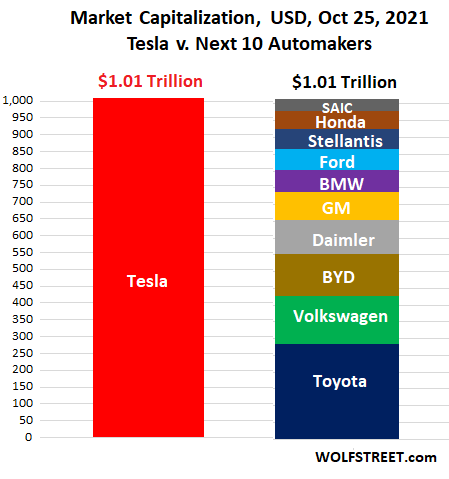
I'm don't get why people care about market cap, but for what it's worth, tesla sits at about 2-3x those two companies combined. And panasonic is "just" a 20 billion dollar market cap company.
Why do people care about market cap? Because it shows mindshare. It shows what people care about and where investments should go, preorders, a lot of that stuff.
Plus market cap can be converted into money (not 1:1, but still).
AFAIK, they eventually want to provide "Model 2" for about 60-70% of Model 3 price. They need to scale up their whole operations to be able to profit off of that.
Yes, they probably want that. And they also want pie in the sky.
The Model 3 was launched in July 2017, about 5.5 years ago. Unveiling in April 2016, more than 6.5 years ago. During the unveiling, if I'm not wrong, they announced the $35k Model 3. In 2019 they actually released the $35k Model 3, as more of a publicity stunt, since they pulled it after only 2 months.
Back then €1 was about $1.2, so that price would have been about €24k.
Instead, in the real world of today, where €1 is less than $1, the cheapest Model 3 you can buy in Europe is about €54k.
So at the new exchange rate, it's more than twice as expensive, and even with the old exchange rate, it would have still been $45k (about 30% more expensive).
So the "Model 2" will actually be around the price that was promised for Model 3.
More than that, Tesla is notoriously unreliable regarding forecasts. At this point I don't think the Model 3 will ever be back to $35k/€35k.
And this new "Model 2" will probably be launched 10 years from now and it will cost what the Model 3 was supposed to cost, back in 2017.
I don't know about you, but I don't make my plans around stuff that takes 15 years to be ready (5.5 years until now + the likely 10 more years it takes them to launch it).
>Yes, they probably want that. And they also want pie in the sky.
That was being said about literally every Musk venture, either failed or successful.
>The Model 3 was launched in July 2017, about 5.5 years ago. Unveiling in April 2016, more than 6.5 years ago. During the unveiling, if I'm not wrong, they announced the $35k Model 3. In 2019 they actually released the $35k Model 3, as more of a publicity stunt, since they pulled it after only 2 months.
>Back then €1 was about $1.2, so that price would have been about €24k.
>Instead, in the real world of today, where €1 is less than $1, the cheapest Model 3 you can buy in Europe is about €54k.
>So at the new exchange rate, it's more than twice as expensive, and even with the old exchange rate, it would have still been $45k (about 30% more expensive).
Blame ECB (for currency value drop) and supply and demand. Turns out enough people want to buy 35k€ vehicle for 54k€.
>And this new "Model 2" will probably be launched 10 years from now and it will cost what the Model 3 was supposed to cost, back in 2017.
Yeah, but who cares? The purchasing power of that will be equal to what it would have cost based on original estimates.
Yes, but this is only your projection, not a fact. Purely based on last 2 years of pandemic and extreme supply disruption, combined with wars and other geopolitics dangers.