...Using the Visual phototransduction cascade [1] to turn light into voltage.
That signal is then transmitted through the optic nerve, pre-processed for reaction and early processing, and then hits the visual cortex where it flops around and other sensory systems combine their voltages trying to make meaning of things in increasingly abstract ways.
That is basically the same process used for all other senses as well, but just using different sensor methodologies
However the actual data uses the same medium of chemical-voltage transport throughout the PNS and CNS.
So using this construct, you need a hardware system that can remap pathways between sensors without rigid architecture and via processes that are emergent based on environmental changes.
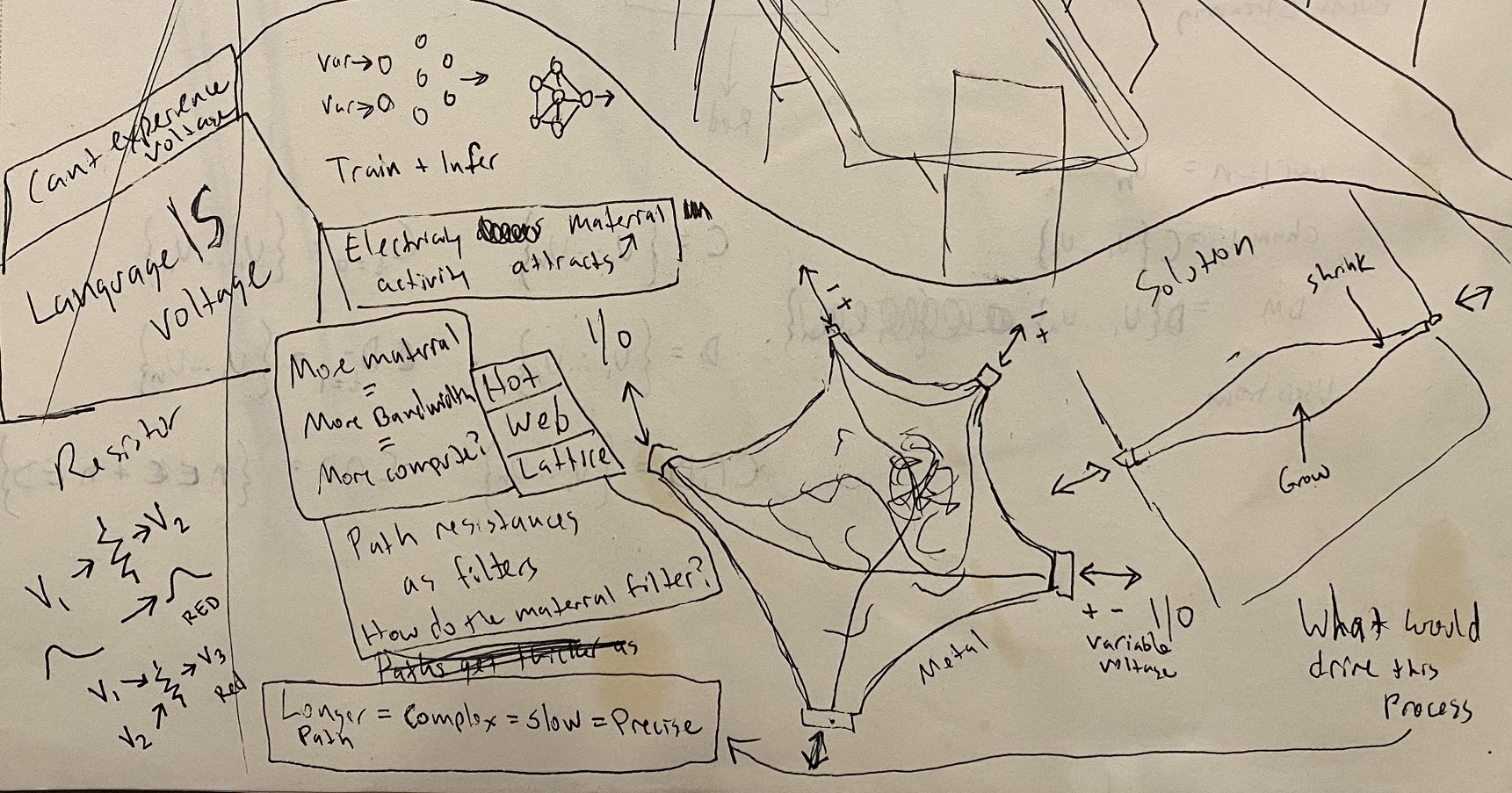
I propose then that a liquid electro-chemical substrate that is materially additive (accretes more permanent power flows) depending on how much power (P = Volts * Amps) is flowing between nodes. That substrate then fills a cube covered in anodes and cathodes that represent individual sensor inputs/outputs.
It's basically recreating a human nervous system with a gel like substrate as the "brain" that can "rewire" itself infinitely as sensors are changed or otherwise.
I have a drawing of this but haven't uploaded it anywhere. If you're interested I'll scan it in
So using this construct, you need a hardware system that can remap pathways between sensors without rigid architecture and via processes that are emergent based on environmental changes.
Yep. Only in my case, my day-dreaming about this to date had me considering using digital components (digital switches, multiplexers, ADC/DAC's, etc) to build the configurable routing part. Not to say that I'm convinced that is the right approach, it's just some stuff that was bubbling around in my head.
I have a drawing of this but haven't uploaded it anywhere.
That would be great. And if you'd like to move this discussion to a different forum (aside from comments on an HN thread) feel free to ping me directly @ prhodes@fogbeam.com. Or keeping it here is fine. Either way's good with me.


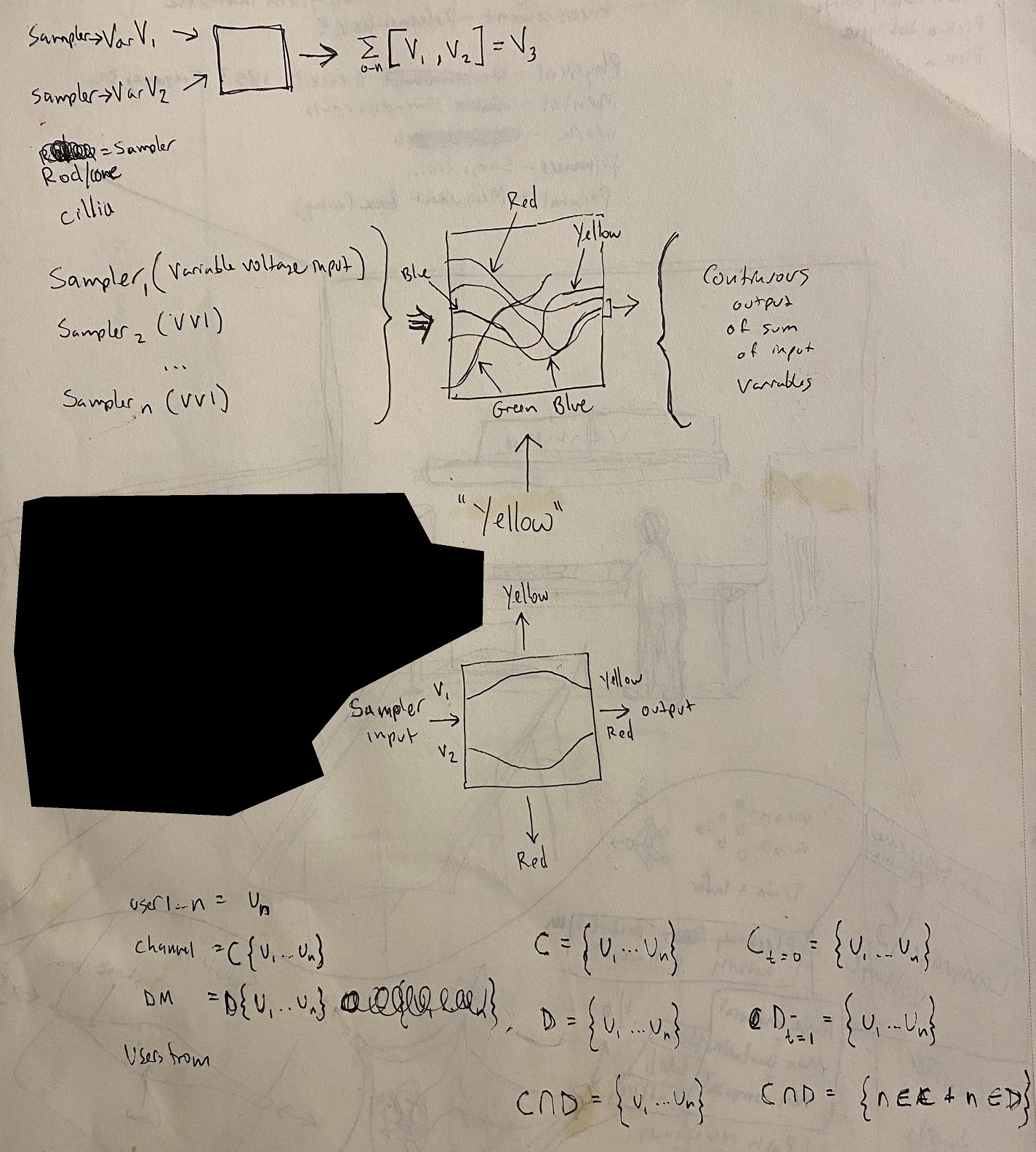
Given that, lets consider your visual system, comprised of:
An analog collimator (lens) sending focused analog signals (light)...
...to light sensitive transducers (photoreceptors) ...
...Using the Visual phototransduction cascade [1] to turn light into voltage.
That signal is then transmitted through the optic nerve, pre-processed for reaction and early processing, and then hits the visual cortex where it flops around and other sensory systems combine their voltages trying to make meaning of things in increasingly abstract ways.
That is basically the same process used for all other senses as well, but just using different sensor methodologies
However the actual data uses the same medium of chemical-voltage transport throughout the PNS and CNS.
So using this construct, you need a hardware system that can remap pathways between sensors without rigid architecture and via processes that are emergent based on environmental changes.
I propose then that a liquid electro-chemical substrate that is materially additive (accretes more permanent power flows) depending on how much power (P = Volts * Amps) is flowing between nodes. That substrate then fills a cube covered in anodes and cathodes that represent individual sensor inputs/outputs.
It's basically recreating a human nervous system with a gel like substrate as the "brain" that can "rewire" itself infinitely as sensors are changed or otherwise.
I have a drawing of this but haven't uploaded it anywhere. If you're interested I'll scan it in
[1] https://en.wikipedia.org/wiki/Visual_phototransduction