My 3rd Gen Toyota 4Runner is old enough to drink and outside of routine maintenance requires almost no thought.
"It's time to get a new car" given that car safety has drastically improved and I have two younger kids in that thing a few times a week but I'm honestly having a really hard time giving it up, something so reliable and plainly functional.
New cars with all their computers and smart technology only look like expensive repairs to me, whereas if something breaks (again, rare!) on my extremely mechanical 4Runner, it's almost always something simple and relatively cheap.
Glad to see Yodas at the top of this list though, when mine finally kicks the bucket, will confidently get another one I suppose.
One of my favorite Onion articles: "Toyota Recalls 1993 Camry Due To Fact That Owners Really Should Have Bought Something New By Now"
Safety between cars, and within cars, has improved. However, due to the increasing size of the average vehicle on the road, among other factors, car safety for pedestrians/cyclists has decreased.
> car safety for pedestrians/cyclists has decreased
It's also decreased for anyone NOT willing to buy a "light truck" (e.g. a modern SUV). There's a loophole that makes it so that light trucks don't have to be tested against the same safety standards as other vehicles. Basically they just have to prove they're safe to crash into other light trucks but do not have to be tested against regular passenger vehicles. This loophole is credited as one of the main reasons car fatalities have been rapidly growing in the US but falling in most other nations. And also for the massive recent explosion in size (again, mainly observed in the US).
But size is just one factor that's reduced safety. Another one is reduced visibility. One of the contributors to the rise in fatalities has been due to parents literally running over their own children in their driveways. These are low-speed, suburban vehicle fatalities that are not happening in other countries
I agree with what you're saying but as a counterpoint, I was literally run over in my driveway by a guardian and almost died, and he was in a '90s Tacoma.
My saving grace was that the truck was so light that even at age five I managed to survive being crushed under one of the wheels thanks to my aluminum frame bike wrapping around my ribcage. Even a modern-day Tacoma is much larger and probably would have killed me.
They want to add automatic braking laws for that, right? I wonder how statistics will change when there are no longer any cars that can't auto brake sold?
People drive horrible now. Running lights, crazy lane changes, excessive speeding etc. Here in the US is started during the pandemic and hasn’t improved.
My counterpoint to this is there have always been a ton of bad drivers. The most important skill to have is to be a predictable driver. Bad drivers will always exist. You cannot change them, and the great number of them is not likely to drop to 0 overnight.
The best thing you can do is drive in a way that even bad drivers expect. Be a speed-limited, blinker-indicating, cautious log in the river. They will parkour around you and you will be fine. Greatly limit your reactions to things. If you freak out, others around you will freak out. Bad drivers cause okay drivers to perform worse. Herd mentality.
(Obvious disclaimer: The best defensive driving in the world won't prevent all accidents)
Both you and the parent post are correct. There have always been bad drivers, a lot of them, and defensive driving is the best thing for that. But at the same time, I have anecdotally been observing a serious breakdown in people following the rules. All the things the parent mentioned have become more frequent in my experience -- the number of times I see blatant bad and malicious driving behaviours has increased significantly in the last few years, except I drive maybe a 3rd of the miles per year that I used to 5 years ago. The density of terrible/self-absorbed drivers has significantly increased.
It's gotten to the point where even defensive driving doesn't do much. How do you defensively drive against someone just blasting through a red light 15 seconds after it turned red and cross traffic is moving steadily? Or the guy in a lifted truck who decides to force you into the shoulder because he thinks it's funny?
"How do you defensively drive against someone just blasting through a red light 15 seconds after it turned red and cross traffic is moving steadily? Or the guy in a lifted truck who decides to force you into the shoulder because he thinks it's funny?"
Probably upgrading to a tank at some point. Or bringing a gun. Or bribe politicians, that they urge the police to focus on maintaining sanity on the roads and take away the licence(and at some point the cars) from those drivers eagerly.
Honestly, if I can, I drive a bicycle, even now in wintertime. But I often indeed wished for a gun, to bring awareness to my fragile self. To express, that I also have rights on the road, despite being lighter. But I am aware, this might not be the best solution overall.
A gun won't save you from the stupidity of bad drivers. And you understand (in your anger) that it won't solve anything. At best (not really) you shoot and kill (?) one of them. You will then go to prison for many-many-many years, you will lose everything and everyone.
Meanwhile there is a million equally bad drivers out there. We can't be doing "a purge" every weekend. It's either policing, or self-driving cars. I am looking forward to the latter.
Altering the built environment helps too. Narrow the streets, reduce turn radii and sightlines, protect crosswalks and bike lanes, use more "uncontrolled" configurations like 2 way stops rather than full stoplights.
It's counter intuitive on one level, but making the road feel less like a racetrack causes most drivers to slow down and treat it less like one:
I'm uneasy about reducing sightlines. There are drivers that will turn blindly into a corner at excessive speed because they feel lucky or invulnerable except they are not, nor the people on the other side of the turn. Small radii reduces speed no matter what, but keep the line of sight. At least one of the two parties have a chance to prevent a collision.
There are drivers that will turn blindly into a corner at excessive speed because they feel lucky or invulnerable except they are not
Making the corner tighter helps solve this.
I walk to work in the suburbs. I have to cross a 6 lane highway. It's signaled properly. But the one thing that nearly kills me every few months the road has very smooth radius corners. Drivers can easily carry 40mph through the corners. Between red-on-red being legal, right-on-green-even-though-pedestrians-crossing-is-active, and generally driver fuckery, I'm amazed nobody has been killed at this intersection.
Speed bumps are brutally effective, like I just experienced driving through spain and france. I also do not like them too much, as they punish everyone and some of them are kind of hidden (by design) and you do not want to hit them even with just 20 mph. So they do prevent speeding in rural areas. But there should be better solutions ..
Speed limiters in cars is one such solution. It's simple to implement - we just need to make it max 130 (or whatever) km/h on highways, 80km/h on "country" roads outside of population centers and 40km/h (or whatever, even making it 50 would help tremendously) in populated areas. It doesn't need to be smart enough to understand every speed limit out there it just needs to know what zone out of 3 possible ones it's in.
Of course car lobby makes it sound like impossible task because of "think about all the edge cases" while even making the most crude system would save tens of thousands of lives and hundred of thousands of injuries per year.
As it is we can even force car manufacturers to implement max 140km/h speed limit in cars even though driving faster than that is criminal level behavior and illegal about anywhere in the world. Like we can't even force them to make the least controversial safety check imaginable already written into law because "driving a car fast boost my ego and you are not taking away my freedom to do so".
Or instead of doing that, just go to smaller engine sizes that force slower driving due to lower power and adjust thr throttle response. Most cars have engines that are way too damn powerful for what's needed (why does a Hyundai i30 need 249HP?) because marketing beats out other concerns. Pair that with modern throttle mapping being a square curve or close to it that means people will just accelerate because the car's behaviour encourages them to. Electric cars only make this worse with instant torque.
Drive an older car from the '90s with a mechanical throttle adjusting a mechanical throttle body and you'll realize that it barely responds until the pedal's about halfway down. Drive a newer car and you'll realize that it's already putting nearly half throttle through the electronic throttle body when the drive by wire pedal is a tenth of the way down. The brakes react like this too, which is a completely difference annoyance. It's a result of manufacturers gaming for fuel efficiency regulations and it manipulates the way people drive into being more aggressive with their acceleration.
For decades never needed speed limiters aside from the gentleman's agreement of 155MPH over tire safety reasons because most people couldn't get above 90MPH, and most cars didn't want to go above 45MPH without stomping on it. Since the early 1990s as a side effect of emissions regulations making engines much more efficient cars have doubled, tripled, or even quadrupled their power output. A 1995 Chevrolet Lumina made 210HP from a 3.8L V6 at the very top of the rev range, meaning for most driving you were at 150HP or less. Right now you can go and buy a low trim Chevrolet Blazer with a 3.6L V6 that makes 305HP about a third of the way up with a flat horsepower curve from there. Just holding speed without accelerating you're at peak horsepower in the Blazer and it feels that way.
Not sure if you're in the US or not, but we have 70MPH interstats crossing over 25mph surface roads and commonly enough my GPS gets confused which one I'm on.
I think every car remembers that spot (or rather the area, which is the intention behind it) and after a learning period, only speedy tourists will hit the road.
Is there a reason small roundabouts are not more popular in the US in residential areas? You probably have noticed them driving through Spain and France as well. Especially in the south of both countries they seem to come very often in small cities. They worked pretty well in my opinion to keep the traffic flowing, but keeping the speeds in check due to merging and turning. Now whether our emergency vehicles could navigate them well is a different story I suppose.
Surrounding my child's school are blind s-curves and streets barely wide enough for 2-way traffic. All densely lined with parked cars. And yet I people speed through these areas on most days during pick-up time, and often they looking at their phones (or whatever else they might be up to behind blackout-tinted windows).
The only thing narrow streets and turns do is make it harder for parents to check for oncoming traffic before crossing. No amount of "traffic calming" will protect us from these rotten drivers. We need at least a modicum of enforcement.
If you get the speed limit wrong with a sign, you can change the sign. If you get it wrong after throwing built obstacles all over it, we are stuck with it. And you're going to get it wrong sometimes, because neighborhoods and safety technology changes (and because safetyism gives low-speed-limit people too much political influence).
"and because safetyism gives low-speed-limit people too much political influence"
Some of us have children, and some of us will hopefully always going to have children, so sorry, but we won't go away with our safety concerns as death on the road is the number one safety issue in everyday life.
There are many readily available technical solutions to limit danger from cars and drivers. The problem is that there is zero political will to do so. I think mainly because of car manufacturers playing this on two fronts: bribing or blackmailing politicians (think what happens to economy if we don't sell faster, bigger, stupider cars!) and influencing pop culture - driving a car in irresponsible manner is still seen as cool and manly thing to do. It's cigarettes all over again and it will take a monumental effort to change it.
"It's either policing, or self-driving cars. I am looking forward to the latter."
But till they are there, policing is the only other option to self justice (aside from changing the road environment like the sibling commentor mentioned). There are drivers who intentionally drive close to cyclists - if one of those will have his tyre shot (without him then crashing into other bystanders, or crashing at all) he likely will have some respect in the future. He also might invest into a bulletproof design, further escalating the whole thing, so like I said, I am not advocating for road warfare. Just expressing my anger.
It’s interesting. I finished reading the Amazon PIP thread. There was a comment about the double standard of at-will employment dishing out immediate firings, but employees must give 2 weeks notice; how employees have become accustomed to getting the shorter end of the stick.
At what point did we lose our ability to enforce our own desires through violence? The one real tool we have for making any tangible change, just stripped away from us at some point.
In my experience, that's usually only because the people that inhabit the gang or the mafia are not themselves civilized.
Dueling, boxing, and so on used to be common among the upper crust. I still get into fights with some of my immigrant friends whenever we reach some total impasse on conflict. We're all civilized, educated, and generally good people. But violence always seems to be the quickest way towards a resolution to certain problems, where simple communication will not do.
In my military officer training, routine boxing/wrestling/fighting was included to give people a "taste of getting hit in the mouth". It was also super effective for solving disputes. I remember having some trivial issue with a roommate that eventually turned into wrestling. After it petered out I couldn't tell you what the problem even was. Sometimes wish a manner like this existed in my workplace settings. A guess the caveat is this doesn't work between large spreads of physical abilities (gender, age gaps etc.). Not complaining i cant fight old people but wish conflict resolution existed in such an immediate and effective manner.
> At what point did we lose our ability to enforce our own desires through violence?
Judging by reports of violent crime, it would be a stretch to say that the “right” to exercise violence when your individual will is otherwise thwarted is very much still possible. I mean if someone wants to gun down their Amazon HR person or manager, there is little to stop them. It won’t end well for anyone though.
I always thought it was a good idea to assume all the other drivers around me were likely to be incompetent idiots. Obviously not the case, but it means when you do encounter one you will be ready.
Replacing old style headlight bulbs with LEDs in housings not designed for them is an increasing problem too, making driving at night often something that is best done with a pair of sunglasses.
> Complete failure of government to regulate and enforce headlight position and brightness.
In my state the only thing they check is the diagnostics to make sure your car isn’t polluting too much otherwise you can drive around just about anything that starts…
I flash my headlights at cars whose lights are too blinding, under the assumption that the driver accidentally left their brights on.
If I’m wrong and their lights are always like that, my assumption is that they would appreciate someone letting them know anyway. If it happens a lot, maybe they’ll figure it out and correct their embarrassing problem.
And if they’ve jerks who know they’re blinding others but just don’t care (or savor it) oh well they should still hear about it.
Someone flashed their lights at me this very morning at around 5:00 am. At first I thought it was because my lights were off, then realized they thought my brights were on. They weren't, it's just that my new car has LEDs that are - apparently - quite bright.
The way I do it is not flashing, which can be misinterpreted as police ahead or something else. I just turn on my high beams until they lower theirs and it works most of the time.
Also headlights are simply higher on average than they used to be (larger vehicles). Very noticeable if you drive a low car. Yet another "arms race" dynamic.
99% of it is people not adjusting the pitch of their headlights or turning on their brights and leaving them on. I had a truck and it was fine, because I cared enough to watch a 5 minute video on how to adjust the angle after a new install of bulbs
We have a newer Subaru and were getting flashed like it was Mardi Gras. I started looking into adjusting the lights and found several places talking about how the Subarus are to high right from the dealer and their service department. That was enough to convince me to just do it.
I don't have a level spot with the recommended distance so we went with some tape on the garage door as a reference. We got them a tad low the first time and raised them up a bit. I can still see and apparently everyone else can too because nobody is flashing their lights at us.
Our other vehicle is a 2014 3/4 ton Ram pickup. Nobody ever flashes me in it.
Not sure if it’s still a thing, but the STI in the mid-00s had a physical slider wheel on the driver side console that changed the pitch of headlights. It was probably a geeky race thing, adjust the pitch when you add weight to the rear maybe?
Either way, it’s genius. I don’t know why that isn’t offered in more vehicles.
> adjust the pitch when you add weight to the rear maybe?
That is exactly the purpose and required (or via dashboard electronics) in most vehicles in the EU after a certain date (don't know which exactly and also I do not know the exact rules but every car i've ever owned had those). Automatic is also fine. They are not meant for "Alternative High beam" as what some people use them for.
The "clip" on the rear view mirror is also not meant for looking at your kids in the rear. It's meant to flip the mirror up so the reflection is not by the mirror but by the refractive index of the glass any you see a "dimmed" image of the high beams behind you.
Yeah they’re all automatic over here. I’ve just never seen a physical, mechanical wheel that controls it. And I’ve never met anyone that dimmed their rear view mirror for the purpose of child monitoring. That’s.. odd.
It is not a race or geeky thing. It's there so that when you are towing a trailer you can lower the headlights.
Usually it is supposed to be calibrated so that the highest position is the default no load in the back position, but you can recalibrate so that it is in the middle if you want.
Interesting, every single car I've ever driven over here (Europe) has had that slider/knob, I'm pretty sure it's required by law. Newer cars with xenon headlights above a certain wattage must have self-leveling + headlight washers to be road legal.
I have family in Europe and visit quite often, never noticed that. Most of the time I get stuck with a Renault even when I try to reserve a nicer rental. I don’t know how those cars are legal. It’s like someone put a car engine in a broken shopping cart.
This is indeed a regulation failure. Vehicle lights should have a height limit, but instead, their placement is dictated by aesthetics. SUVs and pickups should have their front lights placed at the bottom front corners, but instead, it's the top front corners.
Often times I think it's just me and my eyesight getting older, which is certainly the case, but it kind of reassures me to see that there are other people noticing this insane phenomenon, too.
And I say it is insane because in many, many cases I just have to slow down when encountering those lights coming from the opposite direction, for the sole reason that I get blinded by them and I can't see the road for one, two, God knows how many seconds. It's insane, from a safety perspective, that we're allowing blinding devices out there on the road.
Some new vehicles come way to bright too, the absolute worst for this seem to be teslas and I wouldn’t be surprised if it was poor qa on bulb alignment
Hmmm, the worst I've seen are german cars with laser and matrix LED lights. Followed by cars fitted with chinese lights off ebay, whose manufacturers don't care about any local regulations.
Subaru has theirs adjusted too high from the factory. They are nice, bright lights, but now that I adjusted them down nobody flashes their brights at me.
I cannot upvote this comment enough. I can't stand these blue/white LED headlights. What an abomination in the night. To top this, in India highways are littered with white LED street lights. I really miss cruising at 65-70 mph on a dark highway, with just the reflectors to guide my path, lit by the the pleasant yellow headlights.
This has also become a problem as a cyclist. I live in a bicycles-first city, commute that way almost every day, and over the past decade when LED lights became the norm, almost every day during this time of the year there's at least one person that just mindlessly snapped their headlight onto the handlebar. It might just fully shine into your face. Back in the days of those dim incandescent bulbs powered by whimsy generators, it basically didn't matter which direction the light pointed, but with super efficient battery-powered lights, this is annoying. And if both of you are traveling at even just moderate speeds, you don't even have time to communicate the issue in a proper way, except for maybe shouting "it's blinding" and hoping the other person can put two and two together.
I would pay for some moon glasses just for this, don't need to be as dark as sun glasses but something you can grab in an emergency with the super brights where the owner didn't know (or didn't care) to adjust the angle of the headlights to something sane. I'ver had to literally grab my rearview at times and angle it completely and the shit was still reflecting partially on the window and chrome components in my car annoyingly
I noticed that too, but I am questioning myself. I’m wondering how much other people’s driving has gotten worse, vs me getting older, more defensive and risk averse, and noticing such driving. If I look back to my 20s, I was not an exemplary driver.
Cell phones were a huge mistake. I was walking my dog and saw someone eyes fully down doing 20 in the street. It was late and empty but if anyone had been in the street, they’d have been dead.
That distraction didn’t exist 25 years ago on the scale it does today. I wish cell phone use penalties would be promoted closer to those of alcohol use while driving.
Mobile phone use is just a symptom. Everyone fiddling with their fancy in-car radio with distracting bright flashing display in the 90s was just a symptom. People fixing their hair in the mirror in the 70s while driving was just a symptom.
It doesn’t matter what distractions you remove - ban eating and drinking (even water) while driving, impose ruinous fines for those caught… none of it will work.
You need to address the root cause, not the symptom.
The root cause is unspeakable. You will face extreme repulsion if you choose to openly discuss the root cause in this society because it would mean tough questions for our cultural identity.
I was driving in the 90s and mucking around with the radio was quite different to using a smartphone these days. You'd maybe flip stations every 20 mins when one got annoying and it didn't even need taking your eyes off the road generally.
The root cause is human nature, which has been warped by various environmental factors: cell phones, traffic density, lack of experience being the pedestrian, etc.
The human nature isn’t going away, and although the environmental factors are technically under our control, they’re just getting worse.
The fact that technology only made a pre-existing issue worse does not mean that technology is not the problem.
Unspeakable, unimaginable, impossible to write in a sentence on HN?
To me the root cause is that 2-ton metal bricks shouldn’t be propelled at 50 kph, much less 140 kph, by tired hairless apes with tired ape reflexes, ape kids in the backseat, listening to other apes on podcasts, or talking even hands free with ape friends or ape spouses.
We were never designed for this. It’s guaranteed to be a leading cause of death and life-changing injury, so long as we keep it up.
Is that unthinkable or unspeakable? I say it on HN all the time.
We've built an environment (in the US, at least) where driving a car is basically a requirement to participate in society. So, people drive, whether they want to or not. And they drive whether they're physically or mentally capable of doing so successfully.
And we're so entrenched in this design that discussion of a change is met with derision and scorn.
We weren't designed for anything. We take metal from ore and make metals which we shape and make thin to cut other apes in some cases to make them better even.
If you were to have 80% of adults performing surgery every morning and every evening, tired and distracted, you wouldn’t be surprised when surgical accidents become the #3 cause of death.
You can say that fine. It's a reason I'm keen on self driving tech. Which usually on HN leads to a conversation along the lines of it'll never work, Musk is a fraud... but Waymo actually works... and round in circles.
On a more immediate time frame, road engineering can work really well which is why deaths are like 5x lower in places like Holland. Put bends and obstacles in the road and drivers will either have to pay attention or hit them.
We are not apes. Apes can't design, manufacture, distribute, and buy automobiles. Apes can't drive. At all. Thank God we are not apes nor live, nor travel like them. We are able and should create technology that betters our lives. We can and have made reasonable cost/benefit decisions on risks required for these technologies.
This kind of exaggeration undermines any point. An invention as useful as the cell phone was a mistake because people (ab)use it while driving? Any invention is used and abused but the benefits of this invention far outweigh the drawbacks. I'm sure more lives were saved by the mobile phone, and even more were made better, than were taken.
Cell phones were a mistake in the sense that all organization-dependent technology was a mistake. People of the past lived more happy and in-peace years of life despite child mortality, diseases, manual labor, wars, violence, inequality etc. Reason is that no matter how you look at it, either from a evolutionary or a creationist standpoint, human mind-body is literally not designed to live in this world of convenience and ease. There is friction, a lot, which we try to adapt to and fail, and will continue to fail. Nor do we evolve in timescales of 300 years.
No unga-bunga is speaking here. NixOS-loving Rust-writing software dev. Read some Ted Kaczynski folks.
Where I live(not US) I need to constantly use the horn in a gentle manner to get people out of whatsapp after 2~5 seconds of green light. Specially when red lights are longer than 40 secs.
Interestingly is to see police officers and transit officers also distracted inside their cars doing the same.
Another anecdote, but the number of times I think "wow, that guy ran that yellow really late!!!" increased massively over the last four years.
The number of drivers using the bike lane outside my house to make illegal passes has also increased. As has the amount of tailgating and excessive use of horns on the same road.
Same boat here although I can say that in my younger days I was always a “civilized” driver on city streets but was also into street racing and bike speeding which was done in isolated areas or late at night. Nowadays I see more “1 block drags” to show the pop-bang of a shitty modded 3-series than anything else. That and the “Coupé-SUV” owners who think they’re driving an MRAP on an assault.
I suspect vision zero policy and phones are also major contributors. Traffic Engineers across the country are setting traffic lights to reduce the flow of traffic to 20mph without changing the actual speed limit. It’s making people crazy.
Strange! Where I live traffic lights are used for the opposite purpose: they are set up to improve flow by creating green waves that mean ypu don't have to care about orthogonal traffic.
If the point was the reduce the flow, why wouldn't you make a roundabout?
> Strange! Where I live traffic lights are used for the opposite purpose: they are set up to improve flow by creating green waves that mean ypu don't have to care about orthogonal traffic.
story: An out of state tech visiting our job site greeted us with "What the hell is wrong with the traffic lights in Florida!?" This was SW FL and I was a little confused because he had driven thru one of the most benign counties. I might be conditioned though.
Just north of Tampa is a county where most traffic lights are timed to insure you reach the next one on the yellow. I've traveled thru it regularly for 30 years. Between 20 and 15 years ago it reached ~as bad as possible status and there it remains.
Adding awful to bad are the drivers who've realized they can defeat much of this timing with sufficient speed.
That is what should be done, but it’s becoming rare. Bangerter Highway in Utah comes to mind as a good one. I know Colorado is a state big on vision zero policy, where if you go the posted speed you will hit every single light.
The lockdowns brought about a pandemic of selfishness. If x% of the people didn't like lockdown rules and they broke them and they were fine, y% of those probably absorbed the lesson that some other rules are useless.
It didn't help that most, maybe all, governmental authorities were improvising their COVID response, some other percentage of people lost their fear/trust in authorities that way.
Here in Ireland, this is visible in road deaths, which have risen significantly this year, reversing a trend of low road deaths as a result of an enormously successful road safety campaign over the previous 30 years.
There's noticeably more serious accidents too, although the data won't be available until mid-2024 to confirm.
Notably, Ireland achieved a lot of their reductions in road deaths by taking all the people walking and biking and putting them in a car instead. For instance, compared to the mid-80's about 250% as many kids are driven to school, half as many take public transport, and half as many walk or bike.
Certainly, when I lived there Ireland was a terrible place to bike or walk.
With police resources constrained, everyone started driving like insane assholes around here, and it hasn't gone back. I noticed significantly more people cheating the carpool lane, no longer using turn signals, intentionally blowing red lights and stop signs, etc.
Driving culture has changed, at least in this area.
That can't be causuality? Probably people that don't take vaccines are more reckless overall.
'Of course, skipping a COVID vaccine does not mean that someone will get into a car crash. Instead, the authors theorize that people who resist public health recommendations might also “neglect basic road safety guidelines.”'
I am not American but I read this again and again. The most correlated reason, I have read, is that the police explicitly stopped enforcing laws in many places, in reaction to some larger political event. I forgot which.
Oh yes. I live in one of those places. It was when a new sheriff was elected who wasn't driven by ever-fattening budgets. The first thing he did - stop allowing fine revenue to influence enforcement.
Ticketing dropped. Also the quality of policing in general (and officers specifically) improved dramatically. We had way better cops than under the previous sheriff.
> People drive horrible now. Running lights, crazy lane changes, excessive speeding etc.
No longer bothering to turn off long beam headlights, when there is oncoming traffic. And with the new bright led lights, the long beams are really bright.
Sometimes even the low beam lights feel too bright, especially if the oncoming car is big, and thus has its headlights sitting higher up.
Most of the US, AFAIK, doesn't have a mandatory yearly vehicle inspection like Germany (and other countries). Mix that with massive trucks with massive lift kits and you get these fun road behemoths that blind you, even with low beams. It's infuriating. I walked past a lifted truck yesterday in a parking lot and it's hood was level with the top of my head. I'm 6ft tall. It was comically large. How can you drive something like that around? You could hide an entire family in the front blind spot!
I've been driving a drinking-age Jeep Cherokee and the acceleration and top speed make me remember how it felt to drive 20 years ago. The street and road design makes a lot more sense at those speeds. We've gotten used to faster and peppier cars over the years but meanwhile the roads haven't changed to accommodate that.
I drive what is basically the slowest new car you can currently buy in North America (0-100 kph in 11 seconds, vroooom). I just have to floor it on highway ramps. Most cars accelerate much quicker, so people get used to never depressing the pedal more than like 1/3 and end up doing 0-100 kph in more than 10 seconds anyway.
IMO the faster acceleration and heavier weight of electric cars will just lead to much more disastrous accident when people (for example) press on the wrong pedal. Long term the extra deaths are probably balanced out if the more dangerous cars displace enough fuel cars and lower carbon emissions and air pollution... but I wish we regulated acceleration (maybe with a different license category, like we do with trucks?)
It shouldn't be possible to kill someone 10 m in front of your car when leaving from a stop because the manufacturer wants to impress professional car reviewers.
People always drive, not to within certain parameters of the law, but to within their risk tolerance. As cars become more safe, the risk factor reduces which allow people to increase risky behavior.
If you want people to drive better, don't put airbags in their steering wheel, put a 6" metal spike pointed at their chest.
Of course, no one will be making cars intentionally unsafe, but the law is also a risk factor, the risks of getting fined, jail time or licence revocation count too, and these risks can be made higher.
> If you want people to drive better, don't put airbags in their steering wheel, put a 6" metal spike pointed at their chest.
Cars without breakable steering column were pretty much this, so everyone had this before ~1990. Yet, deaths in traffic have steadily decreased since then.
Yep. Studies on helmet usage in skiing and snowboarding showed that as helmet usage became more common, brain injuries increased. People felt more protected and thus took more risks.
* The use of safety helmets clearly decreases the risk and severity of head injuries as compared to non-helmeted participants in skiing and snowboarding.
* The beneficial effects of helmets are not negated by unintended risks as their use does not appear to increase the risk of neck or cervical spine injury as compared to non-helmeted participants in skiing and snowboarding.
* The use of safety helmets also does not appear to increase the risk of compensation behavior as compared to non-helmeted participants in skiing and snowboarding.
* Therefore, helmets are strongly recommended during recreational skiing and snowboarding.
I mean, sure, there are BMJ Sports Medicine Opinion Pieces by Dr Paul McCrory who was prolific with his thoughts on the matter but short on evidence, not to mention that whole, ummm, thing:
> Helmets do not appear to increase the risk compensation behavior among skiers and snowboarders.
Nor has it been proven with a bunch of other activities
> Convincing evidence in support of the risk compensation hypothesis has not been seen with the use of the face-shield in ice-hockey, motor vehicle seat belt use and motorcycle helmet use.
Though the data isn’t the best but what we do have does not seem to support that hypothesis.
The head first tackle is illegal anyhow in American football, but they tackle differently to begin with because you want to down the runner as soon as you can and stop the play more than anything.
This feels like you are arguing a point that is irrelevant.
Are you saying that in Grid Iron there are no concussions? Hate to break it to you, but they are fairly common even before they broadened the definition last year.
Or are you saying that no player ever does a foul, or an illegal tackle?
If so, I'll link you to YouTube clips that disagrees with you.
They are constantly researching helmets and trying to reduce the chances of concussion, but ultimately wearing of a helmet introduces a risk factor, in the same way that that bigger cars make people feel safer so drive more dangerously.
if that were the case it would be a purely US phenomenon. Whereas increasing car size is global (relative to the initial size in each region of course)
I personally find it sad to say but the US has a strong cultural dominance especially in the western world but also beyond that.
From car sizes to architecture styles.
Which is a tragedy, it's the reason why city cars like Puegeot 107/Citroen C1/Toyota Aygo (basically the same car, different brands) are not produced anymore.
If consumers wanted smaller cars, they would buy more of them. A car is still much less expensive than a larger vehicle. The data clearly indicates people want bigger vehicles.
Anecdotally, I have personally heard many people say they want to sit up higher, or have a bigger vehicle because it is safer for them.
> If consumers wanted smaller cars, they would buy more of them. A car is still much less expensive than a larger vehicle. The data clearly indicates people want bigger vehicles.
That's true to a point. In the US there are regulatory loopholes for SUVs, so that's impacting what vehicles people choose.
I agree that fuel efficiency standards are pretty silly. Especially CAFE standards. They should just tax CO2 emissions (or fuel) directly, and let the market sort it out.
Perhaps also have a tax on the weight of the vehicle, because that's a negative externality: heavier cars are worse for other people in a crash.
The cheapest car to buy and insure from any manufacturer is going to be their subcompact hatch or sedan. No, people don’t care about price now that I see a bright yellow Urus doing 70 down a local road once a week.
I think you miss my point. When CAFE standards drastically increase the price of small cars, it impacts choice.
It's similar to house prices. The more regulations you pile on, the more things cost. While those things are seen as "good", it removes choice and increases cost.
When CAFE standards specifically carve out an exception for larger vehicles (pickups and SUVs), thus forcing only compacts and sedans and station wagons to be subject to the new standards, of course there's some price pressure that nudges people into bigger cars.
If CAFE was applied across the board, there'd be no impact on choice at all. But it's not.
Sorry, I don’t buy it at all. People are not rolling up to my kids’ daycare in F150/XC-90/Suburban/4Runner because of CAFE making smaller cars more expensive.
They are buying it because they like bigger cars, and the people that can’t afford bigger cars still want to sit up higher, hence the popularity of CRV/Rav4 type vehicles.
If you don't buy it, I assume that you have solid alternate explanations of why the trends in vehicle size/power/design seem to closely track the preferences expressed by federal policy (intentionally or not) along with fuel costs.
Yes, there are (largely misguided but in some senses game-theory justified) preferences for higher/larger/heavier vehicles. But from what I've read, these don't provide much (statistical) explanatory power for the actual numbers.
I understand what you are saying, but I predict removing or fixing those regulations will not change anything (other than increased fuel or weight taxes), because the underlying reason remains the same. People (in general) prefer sitting higher up and being in bigger vehicles.
I don’t. I would gladly purchase a small practical brand new kei car if I could.
Given the choice between a $35k sedan and a $40k SUV the choice is going to be SUV for most people.
Given the choice between a $15k sedan and a $40k SUV, it gets a lot more interesting.
The US car market is incredibly restricted. You can buy a 300 mile range electric sedan for $25k in China. Why the fuck can’t we get that in North America?
- 2016 Toyota Tacoma TRD OR (4WD + extra features)
The Tacoma is Toyota's smallest North American truck and is dramatically larger than the Ranger. The Ranger suited my needs perfectly except that it wasn't 4WD and would frequently get stuck in Canadian winter. I couldn't even buy good snow tires for it anymore because the rims were too small.
If there were a recently built 4WD truck available in the North American market that was the size of the 91 Ranger, I would have bought it in a heartbeat. It does not exist.
My dad recently totaled his old Mazda pickup. Insurance gave him about three times as much for it as I expected. Turns out the value of used small pickups is through the roof, because there are no new small pickups and used ones are getting harder to find.
They do, just not for the US market. Both ford and Toyota make excellent mid-small-size trucks (Ranger and Hilux). In South Africa we have similar sized trucks from Nissan, Volkswagen, Mercedes-Benz, Colt, a bunch of Chinese brands.
Lol up, 90s Tacomas and 90s Rangers are the about same size. 2023 Tacomas and Rangers are the about same size. But wow is there a delta over that time frame.
Looks like it’s 8” wider and 24” longer, with a box that’s 6” shorter. To be fair on the length/box size, mine was one of the “club cab” ones with the two sideways-facing backseats and no rear doors. Great for throwing the dogs in the back seat but not so good for passengers. It would probably have been an option but I bought the Tacoma a year before the Maverick was released.
> People (in general) prefer sitting higher up and being in bigger vehicles
I don't think that in isolation people broadly prefer bigger vehicles, but in the context of other people having bigger vehicles, a circular problem exists, with people feeling like they're in ever increasing danger behind the wheel if they have a small car but are surrounded by behemoths. If it weren't contextually dependent, I don't think it would be a relatively recent phenomenon, since big vehicles have always been available, and I think you'd see people getting large vehicles despite what's common around them, in terms of both geography and what's on the road. I'd prefer a larger vehicle if I was driving around polar bear country, and I think every other car on the road in North America is a metaphorical polar bear.
don't apologise. this thread is filled with urbanists that aren't "debating" in good faith. Do not give an inch on the car debate because that won't be all they will take.
It's a US thing, pedestrian safety continued to improve in France (mainly caused by infrastructure improvements), but we are starting to have the same sized cars, with the same issues)
in parts of Europe, vigilante groups are deflating tires of SUVs to discourage people from contributing to this trend. Not that I endorse the practice but it's interesting to consider how unimaginable something like this would be to Americans. Whereas in Europe people can probably at least understand why they're doing what they're doing
Those vigilante groups do it largely when a large SUV is parked illegally, such as on a sidewalk. You don't have as much of a chance to park like that in the US.
I've always understood the US's giant car problem was an unintended consequence of the CAFE fuel efficiency legislation, why is Europe getting caught up in the giant car fad? I'd imagine that'd be much more obvious of a terrible idea when the streets are half the size.
It's a result of cultural imperialism and basic psychology.
Many Europeans are bathed in US media. They see the huge cars constantly on US footage, and some are inclined to purchase these even if they are impractical in EU towns and cities. As these behemoths are introduced in the traffic mix, others in classic smaller cars feel threathened, and their next purchase will be a big tanky SUV to feel less vulnerable.
While SUVs are on the rise in Europe, there's still a large gap between what Europeans consider a large SUV and what Americans consider a large SUV. I'm European and I drive what I consider to be a large car: A 2014 Nissan Qashqai. I'm sure it is considered a small can by Americans. There are bigger SUVs on European roads (like the Volvo XC90) but the true American behemoths are rare here. It's usually Americanophiles driving tricked out RAMs.
Europe also has pedestrian crash safety standards as well. US crash safety standards deal exclusively with the occupants of the vehicle, and not at all with the lives of whatever was smashed into.
Even if local roads aren't getting bigger, cars getting bigger due to it's international product. Here in Japan, thankfully there are narrower JDMs available on some category, but for who want a modern expensive SUV, there are only international big SUVs.
Yep, that's the legislation I was referring to that's the cause of the massive rise of gigantic trucks in the past decade.
There's some formula between overall car area (the literal length x width of the vehicle) and the allowed mpg for the automaker's corporate fuel economy. Yay for second order effects...
> There's some formula between overall car area (the literal length x width of the vehicle) and the allowed mpg for the automaker's corporate fuel economy. Yay for second order effects...
Well, every economist (or anyone with half-a-brain) could have predicted these effects.
This wanker (Been driving a Land Cruiser 95 since 2001) feels positively out-wanked when driving in the US; my 4x4 is considered large-ish at home, but is dwarfed by what appears to be common fare in at least parts of the US; I was in Port Fourchon, LA last week, driving a Corolla - the Silverados, RAMs, F350s and whatnot surrounding me could almost fit my Land Cruiser in the glove box!
The Corolla? I don't think half of them would even have noticed if they ran it over.
Anyway - point being, I don't think we are anywhere near getting caught up in the giant car fad. Not yet, anyway.
> Anyway - point being, I don't think we are anywhere near getting caught up in the giant car fad. Not yet, anyway.
Oh we definitely are, it’s nowhere near as bad as in the US yet because they are decades ahead in that mess, but around here mid-size and light-duty full-size are becoming more and more common.
They functionally didn’t exist a few years ago, nowadays it’s a good days when I don’t see one. And that’s not including the few I know of parked in driveways on the drive to work.
Because pickups were not generally available in europe so you wouldn’t bother unless you really actually genuinely needed one (e.g. forestry services), and many countries had automobile taxes which approximated power via displacement, so huge american-style engines led to absolutely prohibitive car tax rates (that’s why euro engines have historically been pretty small, and even completely weird e.g. the UK’s RAC horsepower didn’t even use displacement at all it only used bore, so a small-bore long-stroke piston was taxed significantly less than a large-bore short-stroke one, for the same displacement).
It's also becoming an European thing, I've left a separate comment for it but the latest environment-related regulations are the reason why very small cars like Peugeot 107/Citroen C1/Toyota Aygo and the Renault Twingo (the recently announced EV version is a very expensive marketing gimmick) are not produced anymore.
You attribute it's reliability to it's simplicity, but I'd argue Toyota simply builds things to a better standard.
As most people know, Lexus is also Toyota, and I've been driving a fully loaded luxury sedan from 2008 that also gave me no problems I didn't cause.
It had plenty of fancy do-dads (that are pretty standard nowadays), a steering wheel and seat that moved into place upon entry, adaptive headlights that swivel and self-level, heated/ventilated seats, backup camera and infotainment, etc.
Only time I thought it was acting up (error with the self-levelling headlights), I discovered something had bashed the entire sensor bracket off the undercarriage. Replacing the bracket fixed it immediately.
It made it to 280,000km (175k miles) before a red-light runner wrote it off, and it went to the scrapyard without even the check engine light on.
Meanwhile the equivalent BMW fell apart on me in half that mileage, and hell, so did an F150 actually (and it was as basic as could be!)
FWIW, the computers don’t tend to break. The things that do break are essentially the same as they were 20 years ago. The bells and whistles are mostly for creatures comfort. The mechanical components haven’t changed much.
The only thing that I couldn’t fix on my own in my 2020 vs my 2006 was re-alignment of lane keep system after replacing the windshield.
The chips themselves don’t tend break, but wires and connectors and sensors all do tend to break, and they are effectively part of the computer system. Today, it’s practically moot where you draw the line. Something mechanical on my CRV broke somewhere, and the computer didn’t know what it was, and so the dealer didn’t know what it was, and the computer tended to shut down over unknown problems, and it eventually caused a cascading failure of physical mechanical components when the timing belt melted and it took out the alternator with it.
> The bells and whistles are mostly for creatures comfort.
This is increasingly (and rapidly) less and less true. Traction control, lane assist, adaptive cruise control, and emergency braking, are all things computer controlled (and things that are programmed to disable when the computer barfs. You can argue these are creature comforts, but in my experience they are becoming necessary modern safety features.
In a previous car, the sound system wigged out completely when it was only 5 years old. That’s a creature comfort, except really annoying to go without, and it was insanely expensive to replace, several thousands for a pretty basic stereo.
> in my experience they are becoming necessary modern safety features
EU recently mandated that all new models have Intelligent Speed Assistance[1].
This requires the car to use GPS, read signs and such to determine the current speed limit, and provide some feedback like a dynamic force on the gas pedal[2].
I got this in my new car, being a model introduced last year, and while it's nice when it works, it's often confused or wrong. And that's when it's operating normally. I already had to replace the gas pedal unit because the force feedback mechanism in it had some issues (would tap the pedal like a light hammer strike at a specific position, repeated around 5 Hz if held at the exact position). Wonder how it'll all hold up down the line.
I have never seen an electrolytic capacitor fail in an automotive context, and I've owned my fair share of capacitor plague-era vehicles. I'd imagine it's a combination of preferring other types of capacitor for that environment and not buying the cheapest shit they can find in the markets that day like Dell did.
Yeah, it could also be a product of where you live. I live in the southwest us so it’s more area here and likely to dry them out faster. You’re definitely right about good quality not being as good as it used to be
Yes - it was probably more in the failure to prevent category, but I’m not sure because we never got to the bottom of it, the computer would just freak out and refuse to recognize any systems. We were playing a game of pay the dealer to replace something random to see if it worked, and then repeat when it didn’t. Once it asploded, we paid over $5k in repairs, only to have the computer start convulsing again, so we sold it back to Honda. Something was seriously wrong with Honda’s overall computer design here. I don’t know if they’ve fixed it, but I’m not alone, this is a relatively common issue for ~5 year old CRVs, based on what I’ve found online.
Sounds like you need to stop relying on the dealer and find one of those old guru mechanics that can diagnose a car just by listening to it. Good mechanics are worth their weight in gold and I promise they’re out there if you look for them.
Hehe they can hear the sound of the computer? I have a couple of excellent mechanics on speed-dial, but they couldn’t have done any better here, and I wouldn’t have gotten the work partially reimbursed, nor would Honda have bought the car back after the damage if it had been a 3rd party. It turned out to be really useful in my case that Honda was the one that tried to fix it, and the dealer admitted the problem was out of our control.
Listening to the computers does not work. Debugging electronics also requires different skillset and oftenly, expensive equipment to even talk to it. Also, manufacturers are increasingly locking down debugability of the cars and after market part availability via parts pairing.
That's why people don't like increasing amount of electronics in cars.
As a car nerd, a popular opinion is to avoid cars with computers because they could fail anytime, and can't be macgyvered into a repair roadside.... but after ~50 years of computerized cars, it seems that simple solid state computers, ruggedized and often potted in epoxy essentially never fail. And moreover, they can both give early warnings before you're stranded, and diagnostic data that can be used to pinpoint and fix a problem in the middle of nowhere.
I especially love the mid-90s and newer VWs, which will report through VCDS software literally every part failure, or sensor output, from any system in the car.
It's not computers breaking you need to fear, but your engine management refusing to turn on when you've put a in third-party window washer motor that doesn't provide the correct response to some proprietary encrypted canbus query.
VWs and Audis of that era were notorious for the electrical system getting haunted by ghosts. Forums are littered with threads of perplexing symptoms, engine codes, voltage readings, often no solutions either for most of these threads from userbases that are competent enough to swap engines or transmissions themselves.
As a longtime VW forum guy, those issues are mostly from people not knowing what they are doing and usually involve extensive water damage to the electrical harness- that can be prevented with proper maintenance. For example, there was a design flaw in some of the coolant reservoirs that cause coolant to leak into the wiring harness. If you know about this, you can look for it and catch it early or prevent it.
I have a couple of '71 VWs and you can fix almost anything on the with toothpicks and Scotch tape. They just run because they're so simple ... You can actually count the wires in the harness and read the color codes! Thing thing that drives me nuts are the mechanical voltage regulator - they are finicky and today's hardened solid state devices near them in every way.
Simplicity is huge for reliability… but Volvos from that same early 70s era were also crazy simple yet used solid state boxes to control everything… and were way more reliable than the VWs.
If you don't intend to keep them fully stock there are modern solid-state drop-in replacements for reasonable prices! Given that they are fairly simple cars building one yourself from common electronic parts would not be too difficult either.
The reality is more like how Ford has victimized its customers with its EPAS system. That's Electronic Power Assist Steering.
They got rid of the old dead-simple power steering pump and replaced it with a flakey system based around an electronic sensor that is prone to shorting if you look at it funny and can only be replaced along with the entire steering rack that it's attached to...to the tune of thousands of dollars.
Having a newer VW with VCDS is a superpower. If you are getting vague codes (e.g. Air Intake Leak), you get really good at analyzing sensor data to determine exactly what an issue might be and can either fix it or swap the sensor, most of which can be had for reasonably cheap (notable exceptions include MAF and emissions related sensors).
When I bought a new 2012 VW GTI there wasn't even a schematic for the fuses. Apparently the wiring is not even consistent on a model year, so they just didn't provide it. Easy to understand why with even computer codes mechanics are stuck with a plug and pray methodology.
Sounds like someone has never had to replace a wiring harness or deal with electrical “gremlins.” Also a lot of parts are just really terribly made these days. I had a 2000 car that was already succombing to modern plastic everything crap philosophy. Basically all the motors controlling the windows or power door locks were shot or close to shot. The internal gearing was all plastic and had gone brittle. The fix? Take apart the internal panelling and replace the whole motor assembly with a new unit that has the same fundamental issue with it, even though a five cent gear or clutch is what broke, until you can source no more new oem units, at which point the part is broken until the end of time since all the junkyard stock will also be rotting apart. This is the world we are building for ourselves.
Depends on how well the wiring is done in the first place.
I am an enthusiast of the entire reliability spectrum of vehicle brands.
There are people on Range Rover forums wondering why their infotainment doesn't work half the time in their brand new SUV, meanwhile when I goggled why my windshield wipers wouldn't turn off in my 97 Tacoma, I found a thread that suggested a wire would wear through in 200-300k miles (which was my mileage).
I owned a BMW 325i that was full of gremlins, then owned the competing Lexus IS350 (with far more features), to double the age and mileage without 1/10th of the issues.
One thing that years and years of looking at CR has attuned me to is that car electronics break all the time and are the reason why many brands have poor reliability scores even though the engines run, the lights turn on, and the doors open and close (most of the time).
German and American cars seem to have a very frustrating time with reliable electronics compared to Asian brands for some reason, and the problems persist year after year.
For especially electronic heavy brands, typically higher-end ones the problem can become particularly pronounced, the bottom ranked vehicles on this list are mostly high-end, expensive, and packed full of gear (except for a few). Electric vehicles and PHEVs have the biggest problems being almost entirely electronics.
The thing most likely to cause an accident with my car is the horrible Apple Car Play system via USB. I don't know if it's a VW problem, Apple problem, or just a bad combination of the two. It can be so frustrating and fiddly that I'll just pull over to deal with it. I've been considering going old school with a mount and just use the car speakers via bluetooth instead.
VW problem. My missus' VW Polo has the same problems. I did work out that a brand new, known-good cable and working out that pressing and holding the power button to hard-reset the dash would get it to finally start connecting every time (or connect properly after it's done its "I'm useless" failure mode)
CarPlay is hit-or-miss. It's been totally unusable in every Chevy I've driven and moderately bad in some other cars, but it worked flawlessly in my last Chrysler rental car of all things.
You know what's even better than a working CarPlay, the cupholder in my own car that can hold my phone in a nicely visible spot.
Car Play has been reliable for me in a Toyota. Now the Toyota software, twice in two years I've pulled over to power cycle the car because the head unit was wedged. I'm not sure how that compares to other cars but never had to reboot any of the many rentals I've used over the years.
That's not a new problem. My experience is the most reliable actuators are simple vacuum spring design but they're so much more complex to route and take up space.
Sadly even old computers will being to break at some point. My Ford Focus is old enough to drink too and the central unit has become flaky, like numbers disappearing from the odometer and the speedometer going to 0 in mid route. The repair shop said those were dirty contacts, then the soldering, then they took it to a 3rd party... they didn't solve anything. The mechanics of the car are still good, but I feel like its time has come because now I'm not feeling confident of taking it for a long trip.
As others have mentioned, sensors and stuff related to safety fail all the time. I recently paid $800 to re-enable the safety systems in my (newer) car after a part failed. I've never had such expensive repairs on my 20 year old car.
My 2001 BMW with electronic throttle and fuel injection is doing just fine, the weakest point is plastic in the engine bay gets brittle and starts rotting (especially around coolant system).
As a BMW owner, I actually found the repair pricing quite comparable. Maybe not quite to a Corolla, but it was to a Lexus.
If anything the Lexus was a bit more, due to how common BMW specialist shops are, while there's none for Lexus.
The issue for me was the frequency of the repairs, 5 years of Lexus ownership cost me less than any 3-4 month period of BMW ownership over the 2 years I owned it.
I suppose I can only compare 2-3 repairs, cause the other dozen repairs for the BMW simply didn't break on the Lexus, nor did it spring any of oil leaks my BMW was famed for.
It depends on the country. BMW are well known by any mechanic and parts are widely available, OEM and aftermarket. In my experience BMWs are not more expensive to repair than any Toyota or VW, but due to the increased set of features they have a higher failure surface.
Do computers last 20+ years in cars? Well, my 2005 SAAB 9-3T is still working quite nicely outside of a failing turbo and the injectors needing replacing. Computer still tells me when lights are out, if I'm having A/B throttle sensor voltage issues, etc.
But that's 18 years old. Give me two more and we can have this convo again.
My 1989 Bronco II has a computer ignition system. Even an OBDI diagnostic capability. You can count the pulses and it tells you the error code. It still works fine. Most brands of cars were using solid state computers at least in some capacity like this since the late 1970s
"The only thing that I couldn’t fix on my own in my 2020 vs my 2006 was re-alignment of lane keep system after replacing the windshield. "
That car isn't old enough for anything to be breaking yet. It's barely 4 years old. In a 2006 so many basic simple things break like the clip to hold down the center console, the knob on the AC control. Not to mention the suspension, fan on the blower, belts, power window on at least 1 window. And you expect that touchscreen and software to make it?
My Xdrive unit in my BMW died 3 months after buying it. I thought...ya, out of all the things that could break in my car...it was the bell and whistle computer. I'm betting it was just a capacitor or something, but of course you have to get a whole new one as a replacement.
But the control/configuration of mechanical components is now being done from touch panel and if it becomes unresponsive then it’s as good as mechanical component breakdown.
Yes, I keep on thinking that a premium market will develop for Toyota and Honda cars from roughly ~2006-2010. Those cars were the height of internal combustion technology without all of the electronics.
Absolutely. I have an 08 accord, an 02 Silverado and a 2019 odyssey for the wife and family. I want the safety and sensing upgrades for the family and road trips, but I get a bench seat and /real/ buttons!
I'm averaging 20-30% of a new car payment keeping them running and replacing big parts, but I would spend double (maybe lol) that so I can keep the experience. If I had a commute longer than a half hour maybe I'd look into a Prius or Leaf? Just waiting for a cts-v wagon to fall into my lap....
I don't know of any car from that period that don't have electronics, they all have a bunch of sensors (lambda probe and whatnot), an ECU, ABS and ESP. Or maybe by electronics you mean the various fancy assists like lane keeping and whatnot?
That said this electronics is rock solid, my '08 Civic Type-R is basically pristine mechanically and after 15 years only required maintenance of wear parts. The paint job though has time taking its toll, as varnish is peeling off in various places. Still with proper care I expect the car to last another 15 years without breaking a sweat.
Keep in mind if you're buying a used 2007 Toyota Camry that the oil burning problem was a Toyota Service Bulletin and not a recall. The TSB has expired. If the previous owner(s) did t do it in time, you can't do it for free anymore. You might need to "top up" half a quart of engine oil or do oil changes every three thousand to five thousand miles even with full synthetic oil, ignoring any Toyota assurances that you may wait longer.
That oil burning fix for my 2007 Camry was a lifesaver, I had been quoted $8000 (more than the value of the car) to essentially replace the engine. Then one day the letter arrived from Toyota telling me they'd fix it for free. My sister is still driving that car! That made me a lifelong Toyota customer.
Yeah. I honestly don't know if I'd trade my 2006 Saab 9-3 Aero for a 2023 anything. No trouble, no nonsense, it's fast enough, it doesn't nag at me if I drive around the block without my seatbelt, and minor repairs are rarely more than $100.
A few years back, I had a late model Mercedes GLS, and the damn thing was in the shop almost every other month, and each time it was at least $300-400. Mostly it was electronic components that were at fault; an error in the anti-theft system which cost me $2000 was too much to bear, and I sold the car at a loss...
On most cars you can disable the seatbelt chime with the right sequence, it's just not advertised and won't be found in the manual, but is easily found online.
2005 9-3 Linear here. I wish minor repairs were that cheap. Wait until you need your water pump replaced ;) Get ready to squick hard at the required labor charges (water pump is integral to the engine IIRC, requiring the engine to be pulled.)
Right now I need new spark plugs, injectors, and a turbo replaced, and a grounding strap issue somewhere I haven't been able to isolate. Gonna run me a small bit of change.
2005 was the first year of GM ownership of the brand but SAAB engineers were still all over that vehicle. I could tell in my 9-3t. Definitely some wiring harness decisions you wouldn't see out of GM!
hah those GM connectors are light years ahead of the OG saab/volvo ones that saab used in the 90s. Those were absolute trash. My whole harness on my 88 is just... deteriorating slowly and randomly.
I think a lot of companies started 'getting it right' during that time.
FBOW however, the increasing demands of Fuel Economy and emissions standards led to a lot of poorly-executed moves for various companies from a reliability standpoint; Sometimes it's dual clutch transmissions or CVTs, sometimes it's stuff like cylinder deactivation or a cheaped out Turbo 4 or 3 cylinder design.
And then, all the speeds on an auto in general now. It took a decent amount of time for (most of) the automakers to make a reliable 4 speed auto across their lines. Hondamatic 5 speeds warned of things to come, because first everyone started flipping to 6 speeds (emphasis on the starting bit, in 2006). Then over the next 10-12 years we got all the way from 6 speeds to 10, often without enough size increase budget to know it will all be reliable.
To me it feels like Mazda did it right even though they got a lot of crap for it. Still feels like they are a hidden gem. What they did was focus on fleet average. Their thesis was whats the point of being green if you still are selling gas guzzling hogs and you just sell some garbage EV to offset them.
So what they did was first drop their pickup truck and then develop a smooth and efficient 4 cylinder engine mated to traditional transmission to deploy across the fleet, then slowly migrate all of them to a hybrid drive and then finally move to a fleet wide EV architecture. This keeps the fleet average down while also not compromising in other ways like crummy CVTs. (Im not sure if they use deactivation.)
Will it work? well so far their first EV entry didn't fare so well. But they are still on the move to hybrid phase and they make some pretty darn smooth cars these days.
Mazda does OK. They did have their own missteps (a diesel) but they at least haven't been Toyota'd like Subaru.
> Their thesis was whats the point of being green if you still are selling gas guzzling hogs and you just sell some garbage EV to offset them.
Ford doesn't do this, but at the same time I find it hilariously suspicious that despite the success of the Maverick, there doesn't seem to be any messaging about increasing capacity. And I say that because even as an early adopter -most- problems have been in the 'I can still drive it' category. And yet they won't increase production.
I don’t know what’s going on at Ford, but it seems to be nothing but production issues with them. They have constraints on nearly all of their popular vehicles, and are losing tons of sales. I wanted a Maverick, but had to settle for a Nissan Frontier since Ford can’t seem to build one.
This is the era of my 3 cars, but really they weren't the height of ICE tech. There was a breakthrough in power/efficiency around 2018. I just like how non-fussy the older cars are and how they look.
The the breakthroughs you’re referring to are direct injection, then those come with their own downsides. Either severely reduced reliability (when solely using Gasoline Direction Injection (GDI) injectors) or increased cost and complexity. (When using a dual-injection setup, such as GDI + Port Fuel Injection (PFI))
Agreed. It was a time where the computer did all the important stuff of fuel trim, timing etc. but none of the bullshit. 2005-2010 was peak ICE. And the parts are dirt cheap!
The ones from the 90s in good shape are already commanding higher prices after bottoming out like a decade ago. I don’t think the late 90s supra or s2000 ever got truly cheap.
Keep the 4Runner and buy something new for a family hauler.
New vehicles are much safer from a structural standpoint than older ones. Modern high strength steels form the safety cage of the vehicle, and greatly reduce the risk of injury in offset frontal impacts, side impacts, and rear impacts.
And then you have the multitudes of air bags.
Finally, the various electronic gizmos that further reduce risk of injury.
The presence of high strength steels alone warrants a new vehicle purchase. Vehicles are disposable, people are not.
>New vehicles are much safer from a structural standpoint than older ones.
Perhaps if you compare the same model 15 years ago and now that is true, but people rarely buy the same model used as they would new. At least among my aquitances it is common to consider a higher class used car, or a much cheaper lower class new car. I doubt a 6 years old lexus rx350 is less safe than 2023 Toyota Yaris for example. Two cars of comparable price around here in Central EU.
Depends on the new safety tech; it often comes into the luxury brands and works it's way down. 6 years could be long enough for something significant to be in the Yaris.
I can believe that. I've currently got an oldish Merc E class which is statistically one of the safest cars and didn't cost so much to buy. Servicing and petrol are a fair bit more than a small new car though.
> I doubt a 6 years old lexus rx350 is less safe than 2023 Toyota Yaris for example.
Ok, but those two vehicles are significantly different sizes regardless of year, are they not? And that’s usually very relevant where safety is concerned.
that may be true of these two cars, but I don't think he was cherry-picking those just to make his general argument. are you making the general argument that this larger vs smaller car issue will always be the difference? what happens to the difference in safety improvements over time, always overshadowed by size in the used market?
My point was that, depending on the type of collision, a 6 year old rx350 could easily be a lot safer than a Yaris due its much larger size.
Maybe there would be less of a difference in a single vehicle collision, but AIUI in a multi vehicle collision size (and relative height) usually matters a lot. So it didn't seem to make their point very well.
> The presence of high strength steels alone warrants a new vehicle purchase. Vehicles are disposable, people are not.
Agreed. Although the steels used for safety critical parts of new vehicles are now "ultra-high-strength steels", with tensile strengths exceeding a gigapascal. These can be 4x stronger than "high strength steel", and 6x stronger than steel from the "good ol' days"
    - Improved FEM makes modern crumple zones deeper and smoother
    - Heavy use of composites dramatically improve the raw amount of energy absorbed by the car instead of the passengers
    - Better manufacturing methods mean parts can be shaped/placed to be less likely to enter the cabin
    - Better placement of more airbags means you're more likely to hit something soft
    - Better seats and better placements of better seat belts means you're less likely to snap something due to whiplash
    - Better brakes and steering geometry reduces your chance of losing control
    - Better brakes and steering geometry improves your ability to avoid other vehicles
    - Electronic stability control _massively_ reduces chances of rollovers
    - Electronic stability control _massively_ improves your ability to dodge other cars in emergency maneuvers
    - Electronic stability control _massively_ improves your ability to handle bumps and potholes and waves and black ice and other disruptions
    - Electronic stability control _massively_ improves the car's ability to go where you point the wheels regardless of speed or condition
Seriously, especially if you're driving a truck or SUV, you _need_ electronic stability control.
    > According to the U.S. National Highway Traffic
    > Safety Administration and the Insurance
    > Institute for Highway Safety in 2004 and 2006
    > respectively, one-third of fatal accidents
    > could be prevented by the use of the technology

    > Additionally, SUVs with stability control are
    > involved in 67% fewer accidents than SUVs
    > without the system

    > The IIHS study concluded that ESC reduces
    > the likelihood of all fatal crashes by
    > 43%, fatal single-vehicle crashes by 56%, and
    > fatal single-vehicle rollovers by 77–80%.

    > ESC is described as the most important advance
    > in auto safety
Not "the most important since seat belts", not "the most important since air bags", not "the most important current advance". Electronic stability control is THE most important safety feature in modern automotive vehicles, the single biggest factor in whether you will die because you got in a car _period_, more than air bags, more than seat belts, more than crumple zones, more than _headlights_ or _tire compounds_ or _safety glass_. Preventing an accident entirely is better than any mitigation and ESC is incredibly good at preventing a huge class of accidents.
And those numbers are from 2005-ish. Modern active rollover prevention and traction control systems and anti-understeer/oversteer controls are _even better_.
Electronic stability control is pure wizardry. It’s useful to dig up some videos on YouTube watching it in action, or, even better, when it’s not in action. Look up the “Moose maneuver”.
Traction and stability control, are one of those things I wonder if they aren't negated by human factors.
I have an old 90's tachoma that doesn't even have antilock brakes. It drives a bit like a car when compared with a modern truck, but the rear will slide out even on gentle curves, in the rain it can slide hundreds of feet when stopping (yah pulse the breaks manually), and its narrow and high meaning they roll over if you look at it wrong. One doesn't feel "safe" in it, and you know to maintain a lot of stopping distance, slow down before curves, and generally drive like a 90 year old. I have a much newer tundra. It is a brick on wheels with magic traction control, and it feels glued to the road because of it. Except it is easy to fail to respect it and discover one is simply going too fast into a turn, or a stoplight/whatever, and the antilock and traction control aren't going to save you. The one significant advantage is that you can steer it into a ditch while panicking rather than ramming it straight into oncoming traffic when that happens.
So, i'm betting in the end, the more aggressive driving the turndra encourages by giving people more of a feeling of being in control negates some of the additional safety. It's like power steering lets tiny women (and men) drive massive trucks/SUVs they wouldn't otherwise drive if they had to crank those huge tires holding all that weight manually.
I've disabled ESC and it's pretty amazing how much of a difference it makes in my car. But I can still make it go crazy by driving over a small bump while turning and accelerating (like, out of a driveway onto a busy street)
Well considering that SUVs have a higher CG and people tend to drive them like they are small cars I'm not surprised ESC is so effective for SUV drivers.
ESC in a car for me can be helpful or detrimental depending on the vehicle and the implementation.
Having watched some youtube of most dramatic webcam recorded crashes, I can believe that. They often start with some car losing stability and going sideways.
Not even slightly. I wouldn't touch a human-safety-critical system like that if you paid me twice what I'm currently making. No, I just would really like it if people didn't die in car accidents, I think that modern controls theory is Really Neat, and I'm entirely willing to evangelize for modern safety technology when it has the potential to prevent ONE THIRD of all deaths in automotive accidents in the US.
I remember when ABS braking was introduced, with all the fanfare of your enthusiasm. ABS braking was supposed to reduce accidents but actual statistics said it didn't. It made people write articles that said "it's almost as if humans have a built-in riskiness gauge, and as we make cars safer, they drive more recklessly" (and not "wreck"lessly haha).
I just checked wikipedia and there is a paucity of info showing actual effectiveness, and some showing what I just mentioned. It's a little suspicious that there is not overwhelmingly positive data https://en.wikipedia.org/wiki/Anti-lock_braking_system#Effec...
It's interesting that motorcycles show a flat and unambiguous 30% fewer fatal crashes when riding bikes equipped with ABS. Which does somewhat support the theory that it's down to a Jevons-paradox-alike effect, given that AFAICT motorcyclists tend to be reckless enough drivers that there's no physical way for them to become more reckless in response to improved safety technology.
I believe motorcycles are in a different category than cars for a few reasons:
1. If you are too fast to squeeze the brake lever, the tire carcass will not deform properly, giving you the the maximum braking potential. There's a large difference in braking performance just grabbing vs. applying in a controlled manner. You can look up motorcycling racing brake application for more info on this.
2. Breaking too hard can cause a stoppie (a wheelie using your front wheel). Done improperly, that creates a lot of fear in the rider.
3.If you lock the brakes and steer, you are likely to have the front end of the motorcycle dip, causing it to lowside.
People complain about new cars being harder to fix because of electronics but I think post OBDII they are actually easier because they tell you what is broken with error codes and also forums of experts are just a click away.
I do think its true that you can no longer be a diy hotrodder for most models because there is so much complexity with timing, emissions, fuel efficiency strategies, variable valve timing etc.
I've found most car forums tend to drive the real experts away due to them being full of blowhards. The real experts get tired of getting told by these folks they don't know what they're talking about, and end up creating closed invite only forums to trade info and advice on that the casual shade tree mechanic has no access to. I completely gave up on Rennlist after I asked a question about the turbo control system on the Porsche 951 only to realize many useless replies later that these people didn't even understand the basic theory behind how a turbo works. I answered my own question by bench testing an old junk turbo I bought on eBay and reported back to the forum only to be yelled at for not trusting their 'expert' advice. I've had similar experiences on other forums. Don't even get me started on the internet myths of DOT5 brake fluid that pretty much every forum takes as gospel. Even stacks of research papers and mandatory legal requirements don't keep people from spreading false information. Who needs all that nonsense? I now typically just pick up the phone and talk to experts I have personally worked with.
Funny you mention a 951 that is the exact car I am working on right now (an 86). Certainly Rennlist has been not very helpful, but I think its just in the nature of the internet to have an extremely bad signal to noise ratio. I use the term experts lightly but I find that the knowlede online goes way beyond what you can find in the service manual. Roughly 75% of the time I can find an answer and the rest I need to do some basic science or logic like bench testing a turbo.
When a car makes regular maintenance really easy and/or cheap, it's going to be more likely to never break. My Toyota Prado had the oil filter easily accessible at the top of the engine bay instead of being a PITA deep underneath near the sump, and had a "lip" around the seal to catch oil drips and divert down a hole to a catch line.
Makes me actively angry that this design isn't universal.
Same sentiment for my washer/dryer. Bought an older (used) set for $300, They have lasted 7 years so far, which is in addition to however long they were in use before: I would guess at least 7 more.
Seems like lots of people lament how things like cars, refrigerators, washers, etc. are becoming less mechanical and more electronic. Maybe there's a market for "bespoke" mechanical items.
Its kind of ironic that here in HN, a forum about technology and software, a lot of people have sentiments about less electronics and software. We know this stuff breaks in bad and odd ways and the more you have in a product (car) the more chances there are of it happening. Less is more.
Electronic stuff is still reparable. Probably even more cheaply, in some regards (certainly material cost). We've just been made to become accustomed to viewing electronic devices as disposable/primarily replaceable. And while most people have turned a wrench before, knowing how to use a soldering iron/heat gun/magnifier effectively is not a common skill. Could be, though.
My built-in refrigerator was slowly dying. Weak beeping, occasionally power cycling - and getting worse as the days went on. No longer under warranty, and no replacement parts being made. Replacing the fridge would escalate to replacing cabinetry, and possibly a full remodel since that would “enhance” the worn look of everything else. You may know how this goes…
I knew enough to google the symptoms and found someone that would “rebuild” the main circuit board for a flat fee of $250 with about a week to turn around. That’s a fair bit cheaper than the remodel option.
But that got me thinking “if it’s a flat rate, and occasionally something is hard to fix that means most repairs must be trivial or the person wouldn’t be making enough money”. What’s an obvious, easy and cheap circuit board problem? Capacitors.
I had to buy a tester for $150 but I get to keep it. And the bad capacitor it found cost $.08.
Knowing just a little and being willing to learn a little more saved me a considerable amount of time, trouble and money.
I hope the same is true for cars because I have three relatively new ones in the family and we tend to keep them 10-20 years.
We also know that any electronic stuff is very often designed to not be reparable at all. While there are standard interfaces for standard diagnostic data, you rarely can skip dealing with a very closed stack of software, intellectual property around a thick shield of armor.
This is why you get things like heatable seat DLC.
I would like people to get into the habit of spinning up homebrew firmware/software to deal with this. Rockbox for your Ford. It's a heated seat, Michael, how much could it cost? Ten hundred lines of code?
Repairing electronics is not fun. Ask any undergraduate that spent hours looking for broken op-amps and bad solder joints. I don't think its the same class of repairability as old cars.
Maybe our family have just been lucky with the brands we pick, but I definitely haven't found this... My Electrolux fridge has been 100% solid for over seven years now, which I bought because my parents had had one for eight or nine years at the time (which is still going). My Bosch Series 8 front-loader washing machine has also been a tank, same age, no signs of anything going wrong, same story - I bought it because a friend had had a similar model for years, theirs is still going to...
Seems like there are still reliable appliances to be found, it's just probably that there's more low-quality cheaply made appliances on the market than there used to be, so it used to be easier to get a good one without researching so much...
It's sad that we're at a point where you consider a washer lasting 7 years to be something worthy posting about. Not long ago, applicances routinely lasted for decades.
SQs are reliable, and pretty robust. However, it is important to know that the top-loader agitator models and are popular on the Internet use quite a lot of water and are pretty hard on clothing. You may keep the SQ longer, but a modern front-loader may allow you to keep your existing clothing longer.
I don’t think all that many people really feel this way in the end. A significant majority of new car buyers feel very strongly about having Apple CarPlay for instance. And hey, me too.
Adding Apple CarPlay or Android Auto to older vehicles is easier than adding it to a newer one. On a newer vehicle you have to worry about car systems like the AC, seat controls, etc being integrated into the infotainment system. On an older car with a single din radio (w/ cassette deck or cd) you can just buy an off the shelf radio that has CarPlay and Android Auto.
Yeah but that’s just one example. As much as I like to imagine myself as a practical driver who might want to do performance driving or whatever, in reality I like all the creature comforts of a modern car.
Not quite as old, but I drive a 2007 Tundra. Does all the things I need it to do. About a year ago I replaced the foggy headlamps and people thought I had gotten a new car lol
I was at the Toyota dealership not long ago and the mechanic says, “we’re not supposed to say this, but if you just do basic maintenance these cars will go for 20+ years. No way would I sell this for a new one. They cost too much now.”
I had one of those and it turns out they don't have true four wheel drive, but rather an antilock rear differential. It is controlled by a sensor that can freeze in icy conditions and fail to engage. Living in Montana, we had to sell the otherwise perfect truck for something that could reliably get up our driveway in winter.
It was the TRD package that had the locking differential which was electronically actuated, right? But that’s entirely separate from the “true” 4x4 with the barrel drive shaft synchronizing the front and year diffs.
Did you have a pre-runner? Some of those were sold with funky combinations that have the locking diff but a crippled 4x4 that disengages when you hit 10 mph.
Mine didn't have 4WD at all - don't need it where I live. My use case was hauling stuff in the bed and towing a boat. When I purchased the truck, it was one of the cheapest trucks with the towing capacity required for my boat.
I have a 2012 Honda Fit that they will need to pry off my cold dead hands. It's my favorite car of all time, it's everything that I want from a car. Except possibly a larger gas tank.
2003 Honda fit owner here @ 180Mm. Outside regular maintenance, not once have I had to take it to the mechanics. Zero issues. This car was the pinnacle.
Fellow 2012 Fit owner. I bought it after reviewing carcomplaints.com and finding it was a very reliable car by their metrics, all the top problems are related to accessories.
Interesting contrast with the Onion’s other parody, Ford marketing a used 1993 car as the option for poorer buyers “who just need to get from their mother-in-law’s to the unemployment office”.
> it's almost always something simple and relatively cheap
That's a key point. Reliability might be good these days, but long-term repairability is very low.
It's come to the point that even a mind-dumbingly trivial change like changing a brake light bulb or a battery can't be done (on a BMW, surely many other brands) without access to factory repair computers.
So when the factory stops supporting your particular model, what then?
I firmly believe that a century from now we'll still have historical cars from the 1950s-60s running around, but surviving cars from the 2020s will be extremely rare, since they can't be repaired beyond factory support.
I bought a 2004 corolla off the lot and my experience has been the same.
legitimately the only major repair I've ever needed is to replace the oil pan and that was my fault. runs like a champ, I literally just got back from driving it about 10 minutes ago.
It looks ugly as sin as over the years people have thrown themselves at the vehicle, including a line down the passenger side where a fedex semi took a left turn too sharply, but it runs beautifully. Part of that is maintenance, of course, but if you treat'em well they'll treat you well.
I'm in a similar boat. I drive an 07 Volvo wagon, and it's practical, mostly reliable besides the odd repair and replacing wear items.
It's still relatively safe, at least in terms of passive safety (it has a well engineered crash structure, curtain side impact airbags, etc).
It drinks fuel like a drunk uncle drinks wine at a wedding, burns and leaks a little oil, etc. Fuel is very expensive where I live (currently around $8,3 to the gallon), so that's a thing.
But mostly, modern cars are extremely expensive and just not appealing to me as a driver or as an owner. I'd have to go through a ton of repairs and fuel before I'd break even on a new car, I can probably drive my car for more than a decade still before it gets to that point.
Pair that with Mozilla's Privacy Not Included report[0], pervasive tracking in modern cars and bullshit practices like "heated seats as a subscription", and I'm out.
I'm considering just buying a good shell of a car and have it converted to EV when the time comes to replace the Volvo. An EV conversion is about $30-35k for a professional to plan, build, execute and certify. If I want to buy a car that matches or exceeds the comfort, practicality and joy of my Volvo, I'm looking at $60k+ on the new market, at least.
Interestingly the article actually calls out the 4Runner as "among the most reliable models in the survey". Apparently the newer model years are still pretty solid!
On the other hand anecdata, I had a 13ish year old 4Runner with only about 70K miles lose a transmission line on me a couple years back. The dealership shrugged and said maybe it was a chip on the coating from a piece of gravel. Though it may well have been a manufacturing defect. In any case, ended up having to nurse the vehicle home and basically nurse it 2 months until I could get a new Honda.
Which I actually like a lot better. The 4Runner is a very old platform. Other than the infortainment system, a rental I coincidentally had a couple years back was basically identical to the fairly poor handling SUV I had for 10+ years.
Why did the transmission line require replacing the vehicle? I've replaced them on a cargo van...it was cheaper and easier than a pair of rear drum brakes, a normal piece of routine maintenance
The transmission was drivable but damaged because it was a bad leak. Given its age and some body damage, it didn't make sense to repair--and I got a ridiculously good trade-in anyway.
2000 4Runner 2x4 (I think last year made in Japan) 320k miles. Still original alternator, starter and every other major component (transmission, rear end, etc). I am not sure but may have replaced water pump about 10 years ago but I could be wrong and it still might be original. Just tires, brakes, battery and religiously change oil every 3k. Has a little hail damage but other than that looks new and feels dependable and drives well. It is my first Toyota...
Yes, 1999 Tachoma, is largely the same thing, although there is a laundry list of things that need to be done as basic maintenance, which I assume is the same on the 4runner since they are basically the same vehicle. Mine needed rear axle seals, timing cover seals, and I did the water pump preventatively as part of the timing belt change, also because I have the warm climate version, the starter is too small and eats the starter contacts every ~70K or so miles, and last time I just swapped in the higher current starter instead of doing the contacts for the 3rd time.
It also has grease fittings on the drivetrain that, if not greased on a regular schedule (read maybe every ~10K miles), will squeak, the mass airflow sensor needs to be cleaned on nearly the same schedule as even tiny amounts of contamination throws it off and the gas mileage will suffer and eventually the 5ZVFE will knock because of it. And because it doesn't have auto tensioners on the belts, they need to be checked and adjusted every 40K or so, etc. Lots of extra maintenance that some of the newer Toyotas don't seem to require. And of course, just about all of the toyota truck/4runners/etc of that era a super sensitive to brake and tire wear issues which turn them into vibration machines if not kept in perfect alignment/wear/etc because apparently the suspension/etc are so lightweight. Plastic headlamp fog is another one.
While yes, things that seem to wear out on other vehicles seem to be designed for the vehicle's life (alternators, wheel bearings, AC, cabin controls, etc).
(ex my 201x 4.6L tundra, which is plugs every 100K, brakes, tires and fluids, oh and hell the battery on that thing even lasted 2x as long as it was labeled for, I just replaced it last year)
Anyway, many of those items can be ignored for a long time if the vehicle is treated like a 20 year old beater. Things like the rear axle seals can leak into the rear drums and largely be missed until someone notices that the rear diff has been run for 100k miles with barely any fluid, and is cooked. The same is true for the valve covers; they seep in the back near the firewall or onto the exhaust manifold. Unless you look for it, there won't be enough oil lost between changes to notice.
There's one thing about "newer" cars (mine's a 2014) that older cars don't tend to have, and that's the ability to make the car beep remotely. That is insanely valuable in large parking lots.
Bluetooth stereo: that, you could install after-market.
If you use Apple CarPlay or connect your iPhone to Bluetooth Apple Maps will remember where you parked your car once you disconnect. I use this feature quite a bit to know how far I have to walk back to the car when I’m out on a hike.
Though, I imagine an AirTag will give you more precise location.
I hear ya. We have a Toyota that's over a decade old at this point. It only ever needs routine maintenance. We'd like to purchase something newer for the same reasons as yours. But also everything is now "smart" and always online. Just like I want my TVs, I want a dumb vehicle with buttons and knobs. But dumb with premium features like how vehicles used to be, not the cheapest barebones models.
> when mine finally kicks the bucket, will confidently get another one I suppose.
If you can legally buy one. In the near future you might not be able to transfer ownership over on older cars because of their "emissions" and new state or federal restrictions
This has never happened in the United States, and every expert out there says there is no sign of any kind of effort or legislation to do so. Involuntarily losing access to old cars is an imagined problem.
I have a 2006 Toyota Sienna that's approaching 300k miles and a 2001 Mercedes that's got about 220k miles. That's almost the top and bottom of the list and IMHO it's all about regular maintenance. I have a 2008 Honda FIT with under 100k and it constantly needs something.
I’ve got an 08 Fit as well, in 15 years and 150k miles
I haven’t had to do anything outside of brakes/ignition coils/spark plugs. What sorts of things have gone wrong with yours?
Broken front sway bar linkage, leaky caulk art the rear roof seams well-known), spots where the paint wasn't right, early death of DI coils (they should get more than 60k), rodents eating the wiring harness (twice) as Honda uses what they claim is environmentally friendly insulation.
But yeah ... I forgive plugs, oil changes, brakes, filters, etc as it's PM that has given my other cars their longevity.
> Parts can be more expensive than one might think.
Couldn't agree more, due to their added size maintaining/operating a Silverado 1500 was similar to maintaining my Lexus. Reliable enough, but bigger tires, brakes, rotors, more fuel, etc.
Biggest material regret of my last 5 years was getting rid of my 99 Limited. I worried about some of the pillar rust compromising safety with my kid in the car, but you couldn't beat the 3.4, rear locker, etc. Take my vote to not sell yours.
it's an inanimate car that is dispensable. your family's life is not. there is a DRASTIC difference in safety and survivability of newer cars. I would switch over yesterday


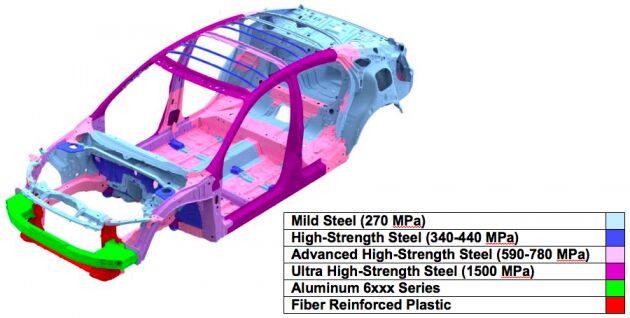
"It's time to get a new car" given that car safety has drastically improved and I have two younger kids in that thing a few times a week but I'm honestly having a really hard time giving it up, something so reliable and plainly functional.
New cars with all their computers and smart technology only look like expensive repairs to me, whereas if something breaks (again, rare!) on my extremely mechanical 4Runner, it's almost always something simple and relatively cheap.
Glad to see Yodas at the top of this list though, when mine finally kicks the bucket, will confidently get another one I suppose.
One of my favorite Onion articles: "Toyota Recalls 1993 Camry Due To Fact That Owners Really Should Have Bought Something New By Now"
https://www.theonion.com/toyota-recalls-1993-camry-due-to-fa...